
Temple
Yushima Tenjin: Tokyo's Shrine for Students and Its Plum Blossom Festival
湯島天満宮Yushima Tenmangū (known as Yushima Tenjin)
A shrine to Sugawara no Michizane, the god of learning, where students pray to pass their exams. The Bunkyo Plum Festival runs every year from early February to early March, and you can walk here from Ueno.
✓ 20 facts checked against official sources on November 26, 2026Next check: around May 2027
At a glance
- Time needed
- About 30 minutes to pray; about 1 hour in plum season or with the Treasure Hall (estimate)
- Admission
- No ticket needed for the shrine grounds
- Gate hours
- 6:00–20:00
- Amulet counters
- Shrine office (left of the main hall) 9:00–19:30; amulet office (right of the main hall) 9:00–17:00
- Plum festival
- Bunkyo Plum Festival: every year from early February to early March (check the official notice for 2027 dates)
- Nearest station
- Yushima Station (Tokyo Metro Chiyoda Line), Exit 3, about 2 minutes on foot
Yushima Tenjin's official name is Yushima Tenmangu. It stands in Bunkyo City in Tokyo, not far from Ueno. The shrine is dedicated to Sugawara no Michizane, a scholar of the Heian period who is honored as the god of learning.
In exam season, students and parents from all over Japan come here to pray for success. The shrine is covered with ema (small wooden plaques for wishes). The other highlight is plum blossoms: about 300 plum trees, mostly white, grow on the grounds, and the Bunkyo Plum Festival is held every year from early February to early March.
When this page was written (November 2026), the dates of the 2027 plum festival had not been announced. Check the notices of Bunkyo City or Yushima Tenmangu before you go.
What to See
- Otokozaka (Tenjin Otokozaka): coming from Yushima Station, you first reach this steep stone stairway of 38 steps. At the top you are inside the shrine grounds. It is a short climb, and the main hall comes into view as you reach the top. If stairs are hard for you, take the gentler Onnazaka (33 steps in all) or the Meotozaka slope instead.
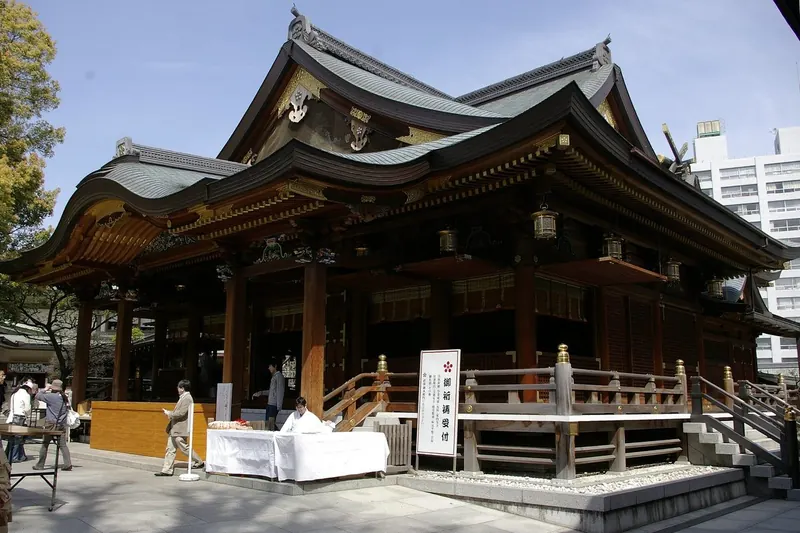
- Main hall: the present hall was completed in 1995 (Heisei 7) and is built entirely of Japanese cypress (hinoki). Standing in front to pray, you can see the wood grain and fine carpentry up close. Anyone wishing for good exam results or success in study stops here.
- Ema: around the hall hang countless ema written by students wishing to pass their exams. You can get an ema at the amulet office (¥1,000), write your wish on it and hang it up. Reading the wishes gives you a real feel for Japan's exam season.
- Nade-ushi (the stroking ox): the ox has a deep link with Sugawara no Michizane, so there is an ox statue on the grounds. People say that if you stroke the part of the statue that matches the part of your body that troubles you, it will get better. Families with children often stop here.
- Plum garden: about 300 plum trees grow here, mostly white plums, with some red ones too. During the festival there are stage shows such as the Yushima Hakubai Taiko drums on weekends and holidays, and nodate (an outdoor tea ceremony) on Sundays. For photos of the blossoms, come between February and early March.
- Treasure Hall: shows objects connected with the shrine. Open 10:00–16:30 (last entry 16:00). Exhibitions change and the hall sometimes closes for a while, so check the official site for admission and dates.
- Izumi Kyoka brush mound (fudezuka): a monument honoring the writer Izumi Kyoka, put up in 1942 (Showa 17) by Satomi Ton, Kubota Mantaro and others. Fans of Japanese literature may want to look for it.
History
According to the shrine, Yushima Tenmangu is said to have been founded in the 2nd year of Emperor Yuryaku (458), first enshrining the god Ame-no-Tajikarao-no-Mikoto. In 1355 (Shohei 10), at the request of local people, Sugawara no Michizane was enshrined here as well, and it became a shrine of the god of learning.
It was rebuilt by Ota Dokan in 1478 (Bunmei 10), and in 1590 (Tensho 18) Tokugawa Ieyasu granted it land. It has been known for its plum blossoms since the Edo period. The Bunkyo Plum Festival has been held here every year since fiscal 1956 (Showa 31).
How to Visit and Tips
- Leave Yushima Station by Exit 3 and walk toward the Tenjinshita intersection, then climb the Otokozaka stairs into the grounds. If you prefer to avoid stairs, enter by the slope on the Kasuga-dori side.
- Wash your hands and rinse your mouth at the temizuya (purification fountain), then pray in front of the main hall. The basic way is "bow twice, clap twice, bow once". See Visiting Temples and Shrines for details.
- For omamori (amulets), ema or goshuin (shrine stamps), go to the amulet office or the shrine office. Goshuin are given from 9:00 to 19:00, but writing directly in your goshuincho (stamp book) ends at 17:00.
- If you want a formal prayer ceremony (gokito), it is accepted every day from 9:00 to 16:30.
- Weekends during the plum festival are busy. For quiet photos, come soon after the gate opens in the morning.
Point-and-show Japanese
| English | Japanese | Romaji |
|---|---|---|
| One ema, please | 絵馬をひとつください | Ema o hitotsu kudasai |
| Could I have a goshuin, please? | 御朱印をお願いできますか | Goshuin o onegai dekimasu ka |
| Where is the study amulet? | 学業守はどこですか | Gakugyō mamori wa doko desu ka |
Basics (hours, prices, access)
Yushima Tenjin (Yushima Tenmangu) 湯島天満宮
The shrine of Sugawara no Michizane, god of learning, and a well-known plum blossom spot in Tokyo
A shrine to the god of learning, visited all year by students and their parents. From early February to early March every year, about 300 plum trees bloom and the Bunkyo Plum Festival is held.
It is within walking distance of Ueno and Okachimachi, so you can visit on the same day as Ueno Park and Ameyoko.
- Gate hours
- 6:00–20:00
- Amulet counters
- Shrine office (left of the main hall) 9:00–19:30; amulet office (right of the main hall) 9:00–17:00
- Prayer ceremonies
- 9:00–16:30 (every day)
- Treasure Hall
- 10:00–16:30 (last entry 16:00); sometimes closed for a while
- Admission
- No ticket needed for the shrine grounds
- Getting there
- Yushima Station (Tokyo Metro Chiyoda Line) Exit 3, about 2 minutes on foot; Ueno-hirokoji Station (Ginza Line) Exit A4 or Ueno-okachimachi Station (Toei Oedo Line) Exit A4, about 5 minutes; JR Okachimachi Station North Exit, about 8 minutes
- Phone
- 03-3836-0753
Before you go
- The 2027 plum festival dates have not been announced yet. In past years it started in early February and ended in early March. Check Bunkyo City's site or the Bunkyo Tourism Association before you book.
- Otokozaka is a steep stairway of 38 steps. If you are with older people or a stroller, use the slope on the Kasuga-dori side.
- Goshuin written directly in your goshuincho are given only until 17:00, so keep this in mind if you arrive late in the day.
- In autumn there is also the Bunkyo Chrysanthemum Festival (1–23 November in 2026).
- Ueno Park and Ameyoko are a short walk away, so you can see them on the same day.
Sources (official)
- Yushima Tenmangu official website (Japanese)
- Yushima Tenmangu: Access (Japanese)
- Yushima Tenmangu: History (Japanese)
- Yushima Tenmangu: Shrine grounds guide (Japanese)
- Yushima Tenmangu: Amulets and items (Japanese)
- Bunkyo City: Bunkyo Plum Festival (Japanese)
- Bunkyo Tourism Association: Bunkyo Plum Festival (Japanese)