
Food guide
Sushi in Tokyo: Types, How to Order and Conveyor-Belt Sushi
寿司(江戸前寿司)Sushi / Edomae-zushi
Tokyo sushi ranges from conveyor-belt restaurants to high-end counters. Learn the three kinds of shop, the basic types and how to eat, and ordering gets much easier.
This page explains the dish itself (what it is, how to eat and order it). Places to eat it are listed at the bottom.
✓ 21 facts checked against official sources on November 23, 2026Next check: around May 2027
At a glance
- What it is
- A Japanese dish of vinegared rice topped with fish, shellfish or other ingredients. Tokyo's signature style is Edomae nigiri sushi
- Conveyor-belt sushi
- At large chains, most plates are about ¥110–¥400
- Regular sushi restaurants
- Lunch sets about ¥1,000–¥3,000, dinner about ¥2,000–¥6,000
- High-end sushi restaurants
- Courses about ¥20,000–¥40,000 or more
- How to order
- At conveyor-belt shops, take plates yourself or use the touch screen at your seat; at high-end shops you can order "omakase"
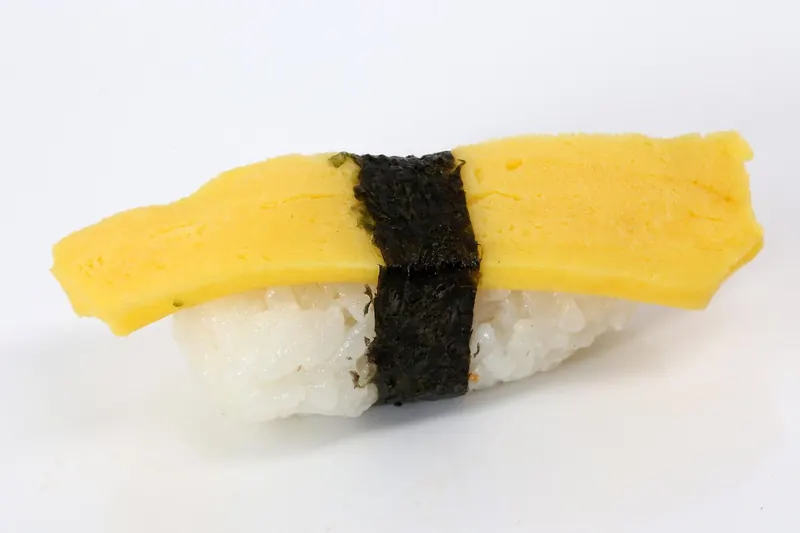
Tokyo sushi centers on nigiri sushi: a small ball of vinegared rice with a slice of fish or another topping on top.
This style is called Edomae sushi. "Edomae" means "in front of Edo" (old Tokyo), that is, the sea in front of the city, Tokyo Bay, and the fish caught there.
GO TOKYO, the official Tokyo tourism site, divides sushi restaurants into three levels: conveyor-belt sushi, regular sit-down sushi restaurants and specialty high-end sushi restaurants. Decide your budget first, then choose a shop, and it gets much easier.
Types of Sushi
- Nigiri (握り): A small ball of vinegared rice topped with fish or another ingredient. It is the symbol of Edomae sushi.
- Maki (rolls, 巻きずし): Rice and a filling rolled up in nori (seaweed). The Tokyo classic is kanpyo-maki, in which rehydrated dried gourd strips are simmered in a sweet and salty sauce and rolled inside.
- Chirashi (ちらしずし): Toppings scattered over a bowl of vinegared rice.
- Anago sushi (穴子寿司): Simmered conger eel on vinegared rice, brushed with a thick sauce called "tsume." It is a classic Edomae topping.
- Kohada and marinated tuna: Kohada (gizzard shad) is cured in salt and vinegar, and tuna is marinated in soy sauce. This kind of preparation in advance is a mark of Edomae sushi.
Three Kinds of Sushi Restaurant and How to Order
- Conveyor-belt sushi (kaiten-zushi): Plates of sushi move along a belt. Take what you like, or order on the touch screen at your seat, and pay by the number of plates at the end. At large chains, most plates are about ¥110–¥400.
- Regular sit-down sushi restaurants: Most sushi restaurants in Japan fall in this group. Lunch sets are about ¥1,000–¥3,000 and dinner about ¥2,000–¥6,000.
- Specialty high-end sushi restaurants: They usually have few seats, and reservations can be hard to get. Courses are about ¥20,000–¥40,000 or more. If your budget allows, you can order "omakase" (leave it to the chef).
How to Eat Sushi
- Eat it in one bite: Each piece is a complete serving, so put the whole piece in your mouth.
- Hands or chopsticks are both fine: You can pick up maki and nigiri with your hands. Use chopsticks for sashimi (sliced raw fish).
- Use soy sauce sparingly: It is there to bring out the flavor of the fish, not to cover it. Many pieces are already seasoned, so you do not need to dip them.
- Wasabi: The chef adjusts the amount of wasabi for each piece. If you want less or none, tell the chef beforehand.
- Pickled ginger (gari) and green tea: Use them to cleanse your palate between different fish.
- Before going to a high-end restaurant, go easy on cologne and perfume so they do not affect the delicate taste of the sushi.
Tokyo's Flavor and History
The best-known story of the origin of nigiri sushi is that of Hanaya Yohei, who opened a sushi shop in Ryogoku in the early 1800s. Nigiri sushi became a popular street-stall snack, and today's sushi counters grew out of those stalls.
The Ministry of Agriculture, Forestry and Fisheries says conger eel is an essential classic topping of Edomae sushi. Its season used to be July to August, but thanks to better distribution it is now available all year.
Where to Eat It
- For an easy first time, choose conveyor-belt sushi. Two central Tokyo branches are listed below. Please check the official sites for opening hours.
- To feel the atmosphere of a fish market, go to Tsukiji Outer Market or Toyosu Market. In the markets, please do not eat while walking; finish your food inside the shop or in the designated area.
Point-and-show Japanese
| English | Japanese | Romaji |
|---|---|---|
| No wasabi, please | わさび抜きでお願いします | Wasabi-nuki de onegaishimasu |
| Chef's choice, please | おまかせでお願いします | Omakase de onegaishimasu |
| The check, please | お会計をお願いします | Okaikei o onegaishimasu |
Where to eat it (with official information)
1Kura Sushi Global Flagship Store Harajuku くら寿司 グローバル旗艦店 原宿
Conveyor-belt sushi in Harajuku
It is on the 4th floor of Y.M. Square Harajuku. The official site shows plates from ¥145 and online reservations.
- Opening hours
- 11:00–23:00 (last entry 30 minutes before closing)
- Price
- Plates from ¥145
- Phone
- 03-6804-6105
2Kura Sushi Shibuya Station Front くら寿司 渋谷駅前店
Conveyor-belt sushi in Shibuya
It is on the 7th floor of the Shibuya Dai-ichi Kangin Kyodo Building. The official site shows plates from ¥145, and it opens at 10:20 on weekends.
- Opening hours
- Mon–Fri 11:00–23:00, Sat and Sun 10:20–23:00 (last entry 30 minutes before closing)
- Price
- Plates from ¥145
- Phone
- 03-6277-5601
Before you go
- Prices are the rough ranges given by GO TOKYO. Please check each shop's menu for actual prices.
- If you do not eat wasabi, say "wasabi-nuki de" before you order.
- If you want a high-end sushi restaurant, check how to reserve well in advance.