
Temple
Nezu Shrine: Azaleas and the Torii Tunnel
根津神社Nezu Jinja
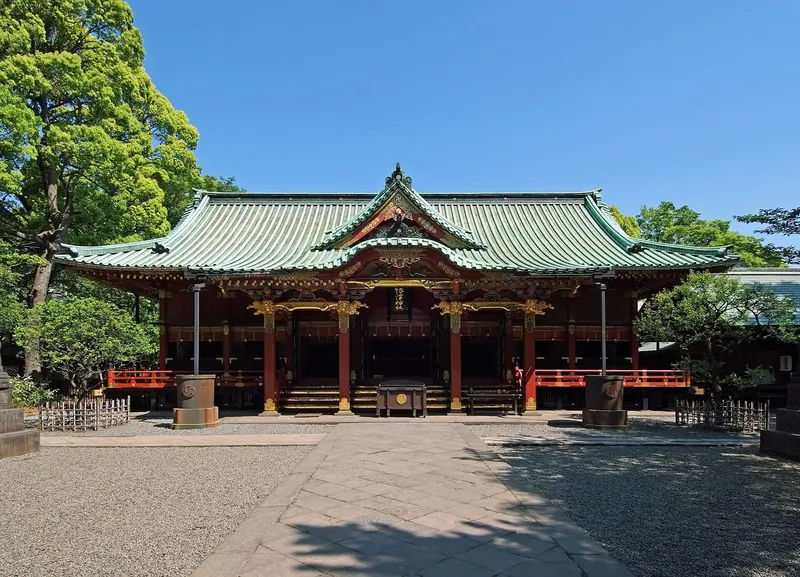
The Gongen-style shrine buildings of 1706 survive intact. The April azalea festival shows 3,000 azalea bushes of 100 kinds.
✓ 14 facts checked against official sources on November 23, 2026Next check: around May 2027
At a glance
- Time needed
- Not stated on the official site
- Admission
- Azalea garden: donation of ¥500–¥1,000 to enter during the festival
- Opening hours
- See the official site for the opening and closing times of the Karamon gate and the juyosho (amulet office)
- Closed
- Not stated on the official site
- Nearest station
- 5 minutes on foot from Nezu or Sendagi Station (Tokyo Metro Chiyoda line) or Todai-mae Station (Namboku line)
Nezu Shrine is in Bunkyo Ward, Tokyo, an old shrine that most walks through the Yanesen area pass. According to the shrine's tradition, it was founded by Yamato Takeru no Mikoto more than 1,900 years ago. The present buildings were completed in Hoei 3 (1706), donated by the fifth shogun, Tokugawa Tsunayoshi.
The main hall, offering hall, worship hall, Karamon gate, west gate, Sukibei fence and Romon (two-story gate) all survive intact and are designated national Important Cultural Properties. In spring you can see azaleas, and at any time of year you can walk the path lined with vermilion torii (shrine gates).
What to see
- Romon (two-story gate): A national Important Cultural Property. The shrine explains that it is the only shrine romon in Edo that has survived, so look up at it as you enter. It is not to be missed if you like old architecture.
- Karamon gate and Sukibei fence: The Karamon has karahafu (curved gables) on both sides, and the Sukibei fence runs about 200 meters around the shrine buildings; both are Important Cultural Properties. Walking along the fence, you get a sense of the whole layout of the gongen-zukuri complex, which suits anyone who likes architecture and photography.
- Shrine buildings: Gongen-zukuri buildings completed in 1706, donated by Tokugawa Tsunayoshi. When you pray in front of the worship hall, you see architecture left from more than 300 years ago, which will reward anyone interested in Edo history.
- Senbon Torii (the torii tunnel) and Otome Inari: On the approach to Otome Inari stand many torii donated by worshippers. After passing through them, you see a stage-style hall overlooking a pond, so leave some time if you want to photograph the torii.
- Komagome Inari: Before Nezu Shrine moved here, this was the lower residence of Tokugawa Tsunashige, and Komagome Inari was the guardian deity of that house. It is worth a quick stop if you want to know more about the history of the land.
- Stone of the literary masters (Bungo no Ishi): The shrine says that Natsume Soseki and Mori Ogai were also parishioners here. If you like Japanese literature, it makes a small stop on your walk.
- Azalea garden: Open during the azalea festival, with 3,000 bushes of 100 kinds, from early- to mid- to late-blooming varieties, so the flowering season is long. If you visit Tokyo in April and like flowers, add it to your plan.
History
According to the shrine's tradition, Yamato Takeru no Mikoto founded the shrine at Sendagi more than 1,900 years ago. The fifth shogun, Tokugawa Tsunayoshi, adopted Tsunatoyo (later Ienobu), the son of his elder brother Tsunashige, and donated the site of Tsunatoyo's residence to Nezu Gongen, Ienobu's local guardian deity, and built the present buildings.
In Hoei 3 (1706) the shrine moved from its old site in Sendagi to this place, and the gongen-zukuri buildings you see today were left behind.
Tips for a smooth visit
- The 55th Bunkyo Azalea Festival ended on 30 April 2026. No official announcement of the 2027 dates has been seen yet, so check again nearer the time.
- In 2026 the azalea garden was open 9:00–17:30, with a donation of ¥500–¥1,000 to enter and free for children aged 12 and under.
- The opening and closing times of the Karamon gate and the juyosho are published as images on the official site, so look before you go.
- You cannot park on the grounds during the festival, so take the train.
Basics (hours, prices, access)
Nezu Shrine 根津神社
Shrine buildings from 1706, azaleas and a torii path
See the notice page on the official site for the Karamon gate and juyosho times.
- Opening hours
- See "Karamon opening and closing times and juyosho hours" on the official site
- Azalea Festival (2026)
- 1–30 April, 9:00–17:30 (the garden opened at 11:00 on 1 April)
- Garden donation
- ¥500–¥1,000, free for children aged 12 and under
- Access
- 5 minutes on foot from Nezu or Sendagi Station (Tokyo Metro Chiyoda line); 5 minutes from Todai-mae Station (Namboku line); 10 minutes from Hakusan Station (Toei Mita line)
- Phone
- 03-3822-0753
Before you go
- The dates and donation for the azalea festival may differ each year, so check the official site before you go.
- Follow the opening hours announced on the official site, and check especially if you go in the late afternoon.