
Food guide
Yakitori in Tokyo: Cuts, Salt or Sauce, and How to Order
焼き鳥Yakitori
One chicken gives many cuts to eat. Once you know the Japanese names and how to choose salt or sauce, ordering at the counter is easy.
This page explains the dish itself (what it is, how to eat and order it). Places to eat it are listed at the bottom.
✓ 19 facts checked against official sources on November 23, 2026Next check: around May 2027
At a glance
- What it is
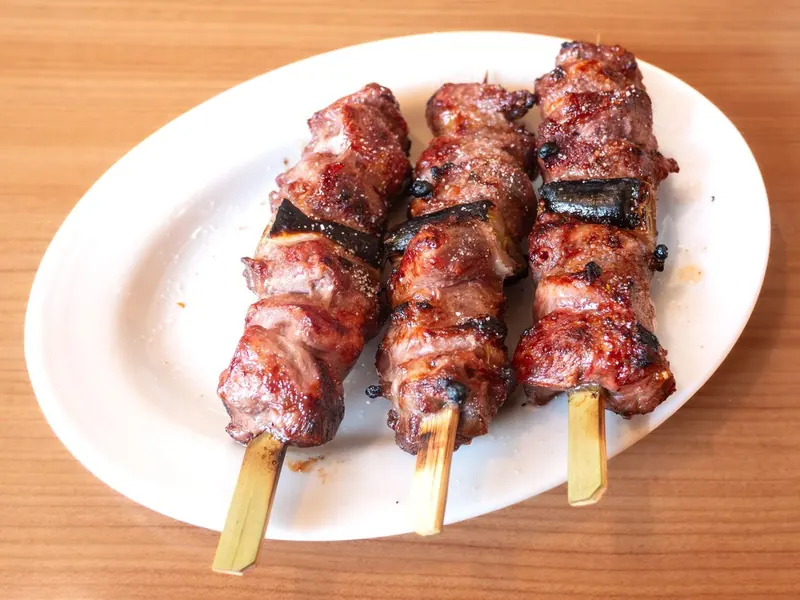
- Bite-sized chicken and vegetables on skewers, grilled over charcoal
- Seasoning
- Salt (shio, 塩) or a sweet and savory sauce (tare, タレ)
- Easy first order
- Negima (ねぎま, chicken and green onion)
- How to eat
- You do not need chopsticks; eat straight from the skewer
- Price example
- Kyobashi Isehiro: lunch sets from ¥2,800; dinner courses from ¥8,000
Yakitori is bite-sized chicken and vegetables on skewers, grilled over charcoal. Places range from small standing bars and restaurants with seats to high-end specialist shops.
GO TOKYO describes yakitori shops as places that specialize in charcoal-grilled chicken skewers, often with a small counter.
Two things matter when you order: which cut you want, and salt or sauce.
Common cuts
- Negima (ねぎま): chicken and green onion, alternating on the skewer. JNTO suggests starting with this.
- Sasami (ささみ): chicken tenderloin, a light cut often served with wasabi.
- Tsukune (つくね): ground chicken shaped into balls.
- Momo (もも): chicken thigh. Isehiro's menu writes it as "momo-niku" (もも肉).
- Skin (皮) and cartilage (軟骨): they have a distinctive texture.
- Liver (レバー), gizzard (砂肝) and heart (ハツ): the innards. The official guide says innards usually taste better with tare sauce.
How to order and eat
- Choose the cut: look at the menu, or point to what you want.
- Choose the seasoning: the staff may ask whether you want salt (shio, しお) or sauce (tare, タレ).
- Eat straight from the skewer: you do not need chopsticks.
- Put used skewers in the skewer holder on the table, if there is one.
Yakitori in Tokyo
JNTO mentions yakitori shops in Shinjuku's Omoide Yokocho, in Shimbashi and in Koenji, and high-end specialist shops in Ginza.
In izakaya-style places (Japanese pubs), a small appetizer (otoshi, お通し) usually comes first, with a charge for it. GO TOKYO gives 200–1,000 yen per person as a guide.
Where to eat
- The restaurant below is the main shop of Kyobashi Isehiro, a yakitori specialist founded in Taisho 10 (1921). Lunch has teishoku (set meals) and donburi (rice bowls), which are easier to try than dinner.
- Dinner is a course meal only. It suits people who want to try several cuts in order.
Point-and-show Japanese
| English | Japanese | Romaji |
|---|---|---|
| Two negima skewers, please | ねぎまを2本お願いします | Negima o nihon onegaishimasu |
| With salt, please | 塩でお願いします | Shio de onegaishimasu |
| With sauce, please | タレでお願いします | Tare de onegaishimasu |
Where to eat it (with official information)
Kyobashi Isehiro Main Shop 京橋伊勢廣 本店
A yakitori specialist founded in 1921
Skewers are grilled over ubame-gashi binchotan charcoal. Lunch offers yakitori teishoku and donburi; dinner is courses only.
- Hours
- Lunch 11:30–14:00; dinner 17:00–21:00 (Sat 17:00–20:30)
- Closed
- Sundays and public holidays
- Price
- Lunch: 3-skewer donburi ¥1,800; 5-skewer teishoku ¥2,800; 9-skewer teishoku ¥4,800. Dinner: 7-skewer course ¥8,000; full course ¥10,000
- Access
- 3 minutes on foot from Kyobashi Station (Ginza Line, Meijiya exit); 5 minutes on foot from JR Tokyo Station (Yaesu South Exit)
- Phone
- 03-3281-5864
Before you go
- The Isehiro website notes that prices may change without notice and that menus differ by branch.
- Izakaya-style places may charge for the appetizer. You can check the notice inside the restaurant before you sit down.
- Places with few counter seats may be full at busy times. Check whether they can seat you.
- For the otoshi charge, see Tipping in Japan.