
Food guide
Soba and Standing Soba in Tokyo: Types, How to Eat and Where to Go
そば・立ち食いそばSoba / Tachigui soba
Tokyo's noodles grew out of Edo street food. Sit down at an old soba shop, or grab a quick bowl at a budget chain near a station.
This page explains the dish itself (what it is, how to eat and order it). Places to eat it are listed at the bottom.
✓ 18 facts checked against official sources on November 23, 2026Next check: around May 2027
At a glance
- What it is
- Noodles made from buckwheat flour, served hot or cold
- Price guide
- Kake soba at Nadai Fujisoba ¥450; seiro soba at Kanda Yabusoba ¥1,320
- Common types
- Kake (かけ, in hot broth), mori and zaru (もり、ざる, cold, for dipping), tempura soba
- When to eat
- Breakfast to dinner, depending on the shop
- Where
- Old shops in Kanda, or budget chains around stations
Soba is a Japanese noodle made from buckwheat. JNTO notes that in some regions wheat flour is added.
A GO TOKYO column calls Edo soba the city's original fast food, rooted in street-stall culture. Today Tokyo has old shops where you sit and take your time, and low-priced shops where a bowl arrives quickly.
What are the types?
- Kake soba (かけそば): noodles and hot broth in the same bowl.
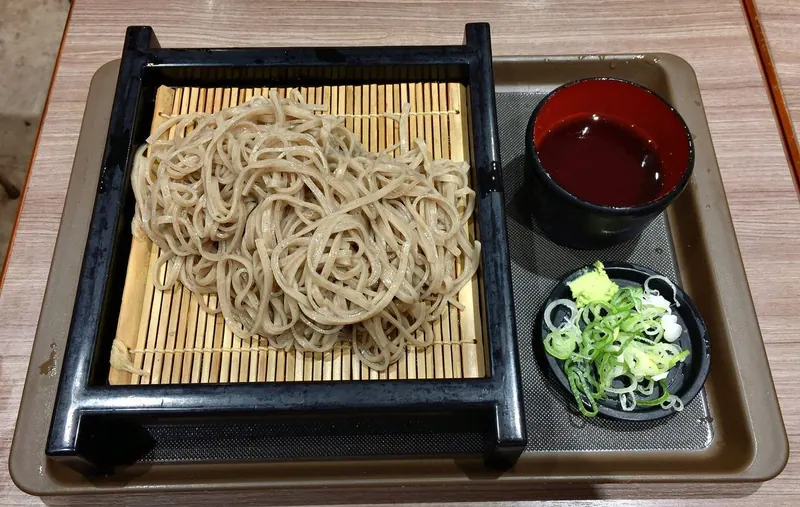
- Mori soba (もりそば): noodles on a plate, with the dipping sauce in a separate bowl. You dip the noodles as you eat.
- Zaru soba (ざるそば): noodles and dipping sauce served separately.
- Tempura soba (天ぷらそば): soba topped with tempura (battered, deep-fried seafood and vegetables).
How to order and eat
- On a hot day, or if you want to enjoy the texture of the noodles, choose the cold dipping style. When it is cold, choose the hot broth.
- Use chopsticks. JNTO notes that most Japanese people slurp the noodles.
- With dipping soba, you do not need to soak all the noodles. For how much to dip at Kanda Yabusoba, check the official site.
- At standing shops, how you order and where you sit differ by shop. Read the notice at the entrance, or watch what the customer ahead of you does.
Standing soba
"Tachigui soba" (立ち食いそば) means soba eaten standing up.
Nadai Fujisoba has many branches in Tokyo. Its website says it does not use ready-cooked noodles: it boils fresh noodles and rinses them in water. Every branch sells breakfast soba (asa-shoku soba) every morning from 5:00 to 10:00. Many branches close for 60 minutes from 3:00 a.m. The website does not say whether each branch has seats, so check on the spot.
Where to eat
For traditional Tokyo soba, go to Kanda Yabusoba. For a quick bowl, go to Nadai Fujisoba. The Fujisoba below is the Shinjuku branch as an example; see the shop list on the official website for other branches.
Point-and-show Japanese
| English | Japanese | Romaji |
|---|---|---|
| One mori soba, please | もりそばをひとつください | Mori soba o hitotsu kudasai |
| One kake soba, please | かけそばをひとつください | Kake soba o hitotsu kudasai |
| I am allergic to buckwheat | そばアレルギーがあります | Soba arerugī ga arimasu |
Where to eat it (with official information)
1Kanda Yabusoba かんだやぶそば
A Kanda soba shop where you sit and eat slowly
For details on the noodles and the dipping sauce, check the official site.
- Hours
- 11:30 to last order 20:00
- Closed
- Every Wednesday
- Price
- Seiro soba ¥1,320; kake soba ¥1,320; tempura soba ¥2,860; duck seiro soba ¥3,190
2Nadai Fujisoba Shinjuku Branch 名代富士そば 新宿店
A chain for a quick bowl
The shop list on the website places this branch next to Shinjuku Isetan. Prices are low, so it is easy to fit a meal in between shopping.
- Price
- Kake soba ¥450; mori soba ¥450; tempura soba ¥620; breakfast soba ¥470 (prices differ by area)
- Breakfast soba
- Every day 5:00–10:00
- Location
- Next to Shinjuku Isetan
Before you go
- Buckwheat is a common allergen. If you are allergic, avoid soba and tell the staff before you order.
- Fujisoba prices differ by area. Follow the notice in the shop.
- Kanda Yabusoba is closed on Wednesdays.