
Food guide
Monjayaki in Tsukishima: How to Order and Cook It
もんじゃ焼きMonjayaki
A thin batter cooked on a griddle and eaten straight from the surface with a small spatula. Learn the steps, and you can cook it yourself in Tsukishima.
This page explains the dish itself (what it is, how to eat and order it). Places to eat it are listed at the bottom.
✓ 19 facts checked against official sources on November 23, 2026Next check: around May 2027
At a glance
- What it is
- A thin flour-and-water batter with toppings, cooked on a griddle and eaten directly from it with a small spatula
- Where to eat
- Nishi-Nakadori shopping street ("Monja Street") in Tsukishima, Chuo City
- Price guide
- About ¥2,000–¥3,500 per person in Tsukishima (budgets published by the shops)
- Nearest station
- Around Exit 7 of Tsukishima Station (subway)
- If you cannot cook it
- You can ask the staff to cook it for you
Monjayaki is a griddle dish from Tokyo's old downtown (shitamachi). Flour is mixed with a lot of liquid, cabbage and other toppings are cooked on the griddle, and each person eats it hot with their own small spatula.
It is similar to okonomiyaki, but the batter has much more liquid and does not set into one solid pancake. JNTO describes the method this way: cook the toppings first, shape them into a ring (a "dote", or bank), then pour the batter into the middle.
The most concentrated place to eat monjayaki in Tokyo is Tsukishima. About 50 shops belong to the Tsukishima Monja Promotion Association, and they are spread along the Nishi-Nakadori shopping street area.
What is monjayaki?
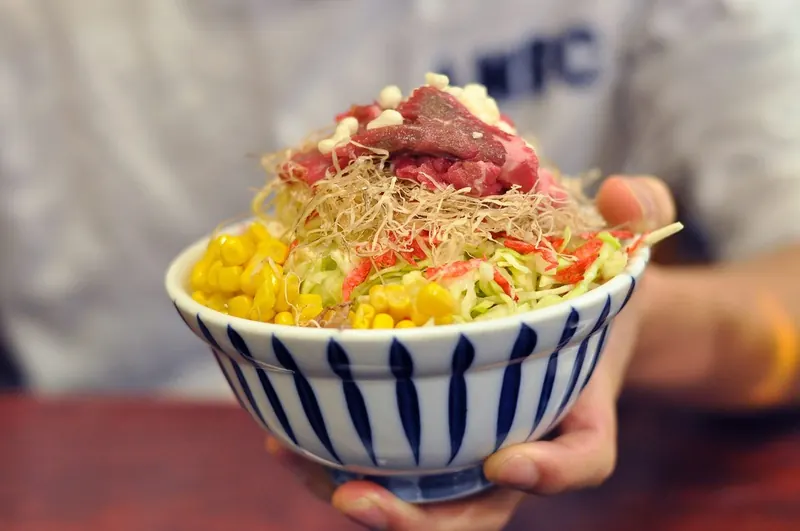
- Basic ingredients: the Ministry of Agriculture, Forestry and Fisheries (MAFF) lists flour, cabbage, pickled red ginger, corn, dried small shrimp, tempura crumbs (agedama), bonito flakes, soy sauce and Worcestershire sauce.
- Toppings: shops offer different combinations, such as seafood or meat. Choose from the menu.
- Tools: you use a special small spatula (hagashi or hera). Press a little of the monjayaki onto the griddle to cook it, then put it straight into your mouth.
How to cook it: five steps
Do not worry if it is your first time. The Association says the staff are skilled at cooking it, so you can simply ask them to show you.
- Toppings: the bowl that arrives holds the batter and toppings such as cabbage, squid, tempura crumbs and dried small shrimp.
- Chop and fry: oil the griddle, put the toppings on it, and chop and fry them.
- Make the dote: shape the toppings into a doughnut-like ring. This circular bank is called the "dote".
- Pour the batter: pour the batter into the middle of the ring and mix it with the toppings.
- Finish: sprinkle on aonori (green seaweed) if you like, press it onto the griddle with the spatula, and eat it when it is lightly browned.
Taste and history in Tsukishima
The usual explanation of the name is that children used the batter to write letters on the griddle to practice writing, so it was called "monjayaki" (もじやき, letter-grilled), and the sound later changed to "monja".
Accounts of its origin differ. GO TOKYO traces it to a children's snack in the early 19th century, while the MAFF children's page describes it as a dish that developed in Tsukishima after the war, when food was scarce.
Where to eat
- Nishi-Nakadori shopping street is right outside Exit 7 of Tsukishima Station. There are many shops, so check the shop list on the Association's website before you go.
- Both shops below are listed on the Association's website. Hours can change, so check again before you go.
Point-and-show Japanese
| English | Japanese | Romaji |
|---|---|---|
| Could you cook it for us, please? | 焼いていただけますか | Yaite itadakemasu ka |
| This one, please | これをお願いします | Kore o onegaishimasu |
| How do I eat it? | 食べ方を教えてください | Tabekata o oshiete kudasai |
Where to eat it (with official information)
1Tsukishima Monja Daruma Main Store 月島もんじゃ だるま本店
A monjayaki shop that opens at 11:00 on weekends
It is about a 3-minute walk from Exit 10 of Tsukishima Station. The Association's page lists monjayaki themed on shrimp, squid and other toppings, and set meals as well.
- Hours
- Weekdays 11:30–23:00; Saturday and Sunday 11:00–23:00 (last order: food 22:00, drinks 22:30)
- Closed
- None
- Prices
- Darumakun ¥1,276, Ikazukushi ¥1,782, Ebizukushi ¥2,365 (tax included)
- Budget
- ¥2,000–¥3,000
- Getting there
- 5 minutes on foot from Exit 7, 3 minutes from Exit 10 of Tsukishima Station
- Phone
- 03-3531-7626
2Kondo Main Store 近どう 本店
A main store that opens in the evening on weekdays
On weekdays it opens in the late afternoon; on weekends and holidays it opens at midday. If you want lunch, plan it for a weekend or holiday.
- Hours
- Weekdays 17:00–22:00; Saturday, Sunday and holidays 11:30–22:00
- Closed
- None
- Budget
- ¥2,500–¥3,500
- Getting there
- 6 minutes on foot from Exit 7, 3 minutes from Exit 10 of Tsukishima Station
- Phone
- 03-3533-4555
Before you go
- GO TOKYO advises that many small shops do not accept credit cards, so bring cash.
- The griddle is very hot. Watch children closely and do not touch it with your hands.
- Sources give different numbers of shops. This page uses "about 50 shops" from the Association's website.
Sources (official)
- Tsukishima Monja Promotion Association: About us (Japanese)
- Tsukishima Monja Promotion Association: How to cook monjayaki (Japanese)
- Tsukishima Monja Promotion Association: Daruma Main Store (Japanese)
- Tsukishima Monja Promotion Association: Kondo Main Store (Japanese)
- Ministry of Agriculture, Forestry and Fisheries: Monjayaki, Tokyo (Japanese)
- Ministry of Agriculture, Forestry and Fisheries: Local dishes for children, Monjayaki (Japanese)
- GO TOKYO: Tokyo Local Food
- Japan National Tourism Organization: Okonomiyaki Guide