
How to
Japanese Food Samples: Why They Look So Real, Where to Buy Them and Hands-On Workshops
The plastic dishes in Japanese restaurant windows are made by hand. Here is their history, where to buy them in Tokyo, and how to book a workshop where you make your own.
✓ 22 facts checked against official sources on November 26, 2026Next check: around May 2027
At a glance
- What they are
- Realistic models of dishes shown in restaurant windows, now made of resin and silicone
- Where to buy in Tokyo
- Kappabashi (Kappabashi Kitchenware Town) in Asakusa, e.g. Ganso Shokuhin Sample-ya
- Tokyo workshop
- Ganso Shokuhin Sample-ya Kappabashi: tempura and lettuce, ¥3,300, about 40 minutes, booking needed
- Language
- The Kappabashi workshop is in Japanese; 1 interpreter needed for every 4 participants
- Gifu workshop
- Sample Kobo in Gujo Hachiman: from ¥1,500, about 30 minutes
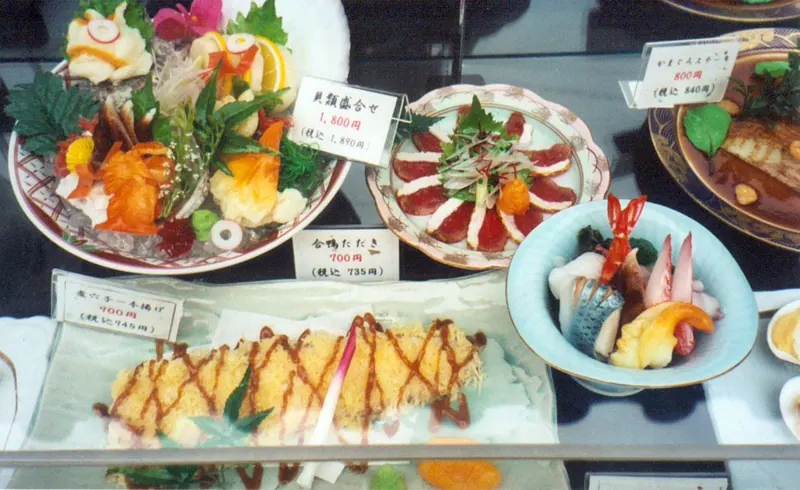
Walk past almost any restaurant in Japan and you may see a window full of dishes: bowls of ramen, plates of curry, parfaits. They are not real food but food samples (shokuhin sanpuru), models that show what each dish looks like and how big it is. For a visitor who cannot read the menu, they are a great help.
Food samples look so real because craftspeople make them by hand. Today they are made with plastic resin and silicone: molds are taken from real ingredients, and the parts are colored with airbrushes and brushes. Small food sample goods, such as phone stands, make fun souvenirs.
In Tokyo, the place to buy them is Kappabashi, a street of kitchenware shops near Asakusa. You can also try making one yourself at a workshop.
Why They Look So Real: A Short History
According to Iwasaki, a food sample maker, food samples were born in Japan at the end of the Taisho period (the 1920s) and grew into a culture of their own. No document survives that tells exactly how they began.
In 1932 (Showa 7), Iwasaki Takizo founded Iwasaki Seisakusho in Osaka after working out a way to make them by trial and error. At first samples were made of wax. From the late 1970s to the 1980s, makers changed from wax to resin.
Even now, most samples are made by hand by skilled craftspeople. Molds are taken from real ingredients by covering them with silicone, and the parts are colored using airbrushes and brushes. This is why a sample bowl of noodles can look just like the real thing.
Where to Buy Them in Tokyo
- Kappabashi: about 800 meters long with over 170 shops, the street association calls it Japan's largest shopping street for kitchen tools. Food sample shops line the street along with knives, plates and cookware. See Kappabashi for a walk around the area.
- Ganso Shokuhin Sample-ya, Kappabashi store: a shop run by Iwasaki near the Kappabashi intersection. Open 10:00–17:30. You can buy food samples here and join a workshop (below).
- Ganso Shokuhin Sample-ya, Tokyo Solamachi store: inside Tokyo Solamachi at Tokyo Skytree Town (East Yard, 4th floor). Open 10:00–21:00, so it is handy in the evening.
Make Your Own: The Kappabashi Workshop
- Book online in advance. The workshop is by reservation only. Groups of 1–4 people can book on the shop's booking site; groups of 5 or more book by phone (0120-17-1839, 10:00–17:30).
- Check the language rule. The workshop is held in Japanese. If you do not speak Japanese, you need to bring 1 interpreter for every 4 participants.
- On the day, go to the Kappabashi store. You make 2 pieces of tempura (choose from shrimp, eggplant, pumpkin, shiitake and others) and 1 head of lettuce, using the traditional wax technique.
- The workshop takes about 40 minutes and costs ¥3,300 per person (tax included). It is open to children from the first year of elementary school (about age 6).
- Friends who only want to watch pay ¥500 to enter as observers.
Workshops in Gujo Hachiman (Gifu)
Gujo Hachiman, a small town in the mountains of Gifu Prefecture, calls itself the birthplace of food samples. Sample Kobo there runs workshops where you make, for example, a phone stand that looks like spilled ice cream (¥1,500 for adults) or tempura (¥3,000 for adults, elementary school age and over). A workshop takes about 30 minutes.
Bookings are by phone or through a booking site. Sample Kobo does not take advance bookings during Golden Week, Obon and three-day weekends.
Things to Know
- Food samples in restaurant windows belong to the restaurant. Look, but do not touch.
- Small samples are light and easy to pack. Wrap them in clothes in your suitcase to protect them.
- Prices and workshop menus change. Check the shop's official site before you go.
Point-and-show Japanese
| English | Japanese | Romaji |
|---|---|---|
| I have a reservation for the workshop | 体験の予約をしています | Taiken no yoyaku o shite imasu |
| Can I take a photo? | 写真を撮ってもいいですか | Shashin o totte mo ii desu ka |
| I'll have this one (pointing at the sample) | これをお願いします | Kore o onegai shimasu |
Ganso Shokuhin Sample-ya (Kappabashi store) 元祖食品サンプル屋 合羽橋店
A food sample shop in Kappabashi with a hands-on workshop
A shop of the food sample maker Iwasaki, near the Kappabashi intersection. It sells small food samples and runs a tempura and lettuce workshop using the traditional wax technique.
- Opening hours
- 10:00–17:30
- Workshop
- ¥3,300 per person, about 40 minutes, by reservation, in Japanese
- Phone
- 0120-17-1839 (toll-free in Japan)
Sample Kobo (Gujo Hachiman) さんぷる工房
Food sample workshops in the town that calls itself their birthplace
A shop and workshop in Gujo Hachiman, Gifu Prefecture. You can make phone stands, memo stands and tempura that look like real food.
- Opening hours
- 10:00–17:00 (open every day except the New Year holidays)
- Workshop
- From ¥1,500 (adults), about 30 minutes
- Phone
- 0575-67-1870
Before you go
- The Kappabashi workshop is in Japanese only, and non-Japanese speakers need 1 interpreter for every 4 participants. Arrange this before you book.
- The Kappabashi store closes at 17:30. For evening shopping, the Tokyo Solamachi store is open until 21:00.
- GO TOKYO notes that most Kappabashi shops are open around 10:00–17:00, so go in the daytime.
- Combine a visit with Asakusa and Senso-ji, which are a short walk away.
Sources (official)
- Ganso Shokuhin Sample-ya: About food samples (Japanese)
- Ganso Shokuhin Sample-ya: How food samples are made
- Ganso Shokuhin Sample-ya: Shops (Japanese)
- Ganso Shokuhin Sample-ya: Kappabashi workshop (Japanese)
- Iwasaki: Company history (Japanese)
- Sample Kobo (Japanese)
- Sample Kobo: Workshops for individuals (Japanese)
- Kappabashi Shopping Street: Overview
- GO TOKYO: Kappabashi Kitchenware Town