How to
Cherry Blossom Season in Japan: When and Where to See Sakura
Average blooming dates for Tokyo, Kyoto, Osaka, Sapporo, Fukuoka and Okinawa, based on 30 years of official records, and how to plan your trip around them.
✓ 9 facts checked against official sources on November 18, 2026Next check: around May 2027
At a glance
- When
- Late March to early April in Tokyo, Kyoto, Osaka and Fukuoka; early May in Sapporo; January–February in Okinawa (a different, earlier-blooming cherry)
- Tokyo (average)
- First blossoms March 24, full bloom March 31
- Kyoto / Osaka (average)
- First blossoms March 26 / March 27, full bloom April 4
- How long it lasts
- About 5–9 days from first blossoms to full bloom (based on the averages). After full bloom the petals fall within days
- Data used
- Japan Meteorological Agency averages for 1991–2020. Each year's actual dates can be a week or more earlier or later
- Best tip
- If your dates are fixed, choose a city whose average full-bloom date falls in the middle of your trip
In late March, pale pink blossoms cover parks, riverbanks and castle grounds across most of Japan. People spread blue sheets under the trees for picnics, a custom called hanami ("looking at flowers"). For most visitors, this short season is the main reason to come in spring.
The trees do not bloom everywhere at once. The front of blossoms moves from the warm south to the cool north over about six weeks. Japan's tourism board says sakura season begins on the island of Kyushu in March, and from late March to as late as early May the blossoms open across the country.
This page uses the official long-term averages from the Japan Meteorological Agency (JMA), not a yearly forecast. Use them to choose your dates and route. Then, a few weeks before you fly, check the current year's forecast, because the real dates move with the weather.
Average blooming dates by city
The dates below are JMA averages for 1991–2020. "First blossoms" is the day JMA records the first flowers on the sample tree at the city's weather station. "Full bloom" is the day JMA records the tree in full flower. All cities except Naha use the Somei-Yoshino, the most common cherry tree in Japan.
| City | First blossoms | Full bloom | Notes |
|---|---|---|---|
| Naha (Okinawa) | January 16 | February 4 | Hikan-zakura, a deep-pink cherry that blooms in winter |
| Fukuoka | March 22 | March 31 | Among the earliest of the main cities |
| Tokyo | March 24 | March 31 | |
| Nagoya | March 24 | April 2 | |
| Hiroshima | March 25 | April 3 | |
| Kyoto | March 26 | April 4 | |
| Kagoshima | March 26 | April 5 | |
| Osaka | March 27 | April 4 | |
| Kanazawa | April 3 | April 8 | |
| Sendai | April 8 | April 13 | |
| Sapporo | May 1 | May 6 | About five weeks after Tokyo |
Tokyo, Kyoto and Osaka bloom within a few days of each other. On a typical first trip that covers all three, you have a good chance of seeing blossoms in each if you travel between about March 28 and April 6 (estimate based on the averages).
How to plan around the blossoms
- Pick your cities, then look up their average full-bloom dates in the table above.
- Plan to arrive a few days after the average first-blossom date and stay through the full-bloom date. This gives the most chances, because trees often look their best from about half open to full bloom.
- Book hotels and trains early. Spring is one of the busiest seasons for domestic travel too. See Best time to visit Japan.
- About three weeks before you fly, check the current year's forecast. If the season is running early, start your trip in the north (Sendai, Kanazawa). If it is late, start in the south (Fukuoka, Kyoto).
- Keep one flexible day in your plan for the city with the best timing.
If your dates do not match the season
- Early March: Okinawa's winter cherries are finished, but the main cities have not started. Plum blossoms (ume), which bloom earlier, are the usual alternative.
- Mid-April: the blossoms in Tokyo, Kyoto and Osaka are usually over. Kanazawa (average full bloom April 8) and Sendai (April 13) are still in season.
- Late April to early May: Sapporo and the rest of Hokkaido (average full bloom May 6). This period overlaps with Golden Week, a string of Japanese holidays when trains and hotels are very busy. See Japan public holidays.
- January to early February: Okinawa's hikan-zakura (average full bloom in Naha February 4).
Hanami: picnics under the trees
Hanami means sitting under the blossoms with food and drinks, with friends, family or colleagues. Japan's tourism board suggests bringing a picnic blanket, or a blue tarp like many local people do, and joining in. In popular parks on weekends at full bloom, people come early in the morning to keep a spot for a group.
You do not need to picnic to enjoy the season. A walk along a river lined with cherry trees, or a visit to castle grounds or a temple garden, is enough. Many famous spots are busiest on sunny weekend afternoons; early mornings on weekdays are much quieter.
Things to know
- The averages are a guide, not a promise. A warm March can bring the blossoms forward by a week or more; a cold one can delay them. Rain and wind at full bloom can bring petals down early.
- Do not climb trees, shake branches or pick flowers. Branches break easily and damaged trees can get sick.
- Take your rubbish home with you or use the bins provided. Many parks have few bins.
- Some parks limit or ban sheets, barbecues or alcohol. Rules differ by park, so read the signs at the entrance.
- Spring also brings a lot of pollen. Japan's tourism board notes many cases of hay fever in this season, so pack allergy medicine if you are sensitive (check the rules in What you can bring into Japan).
Point-and-show Japanese
| English | Japanese | Romaji |
|---|---|---|
| When will the cherry blossoms bloom? | 桜はいつ咲きますか? | Sakura wa itsu sakimasu ka? |
| Where can I see cherry blossoms near here? | この近くで桜が見られる場所はありますか? | Kono chikaku de sakura ga mirareru basho wa arimasu ka? |
| Is this spot taken? | ここは空いていますか? | Koko wa aite imasu ka? |
Before you go
- Fukuoka and Tokyo have the earliest averages of the big cities (full bloom March 31). Sapporo is about five weeks later.
- If you can only travel in the first week of April, Kyoto and Osaka (average full bloom April 4) are the safest choice.
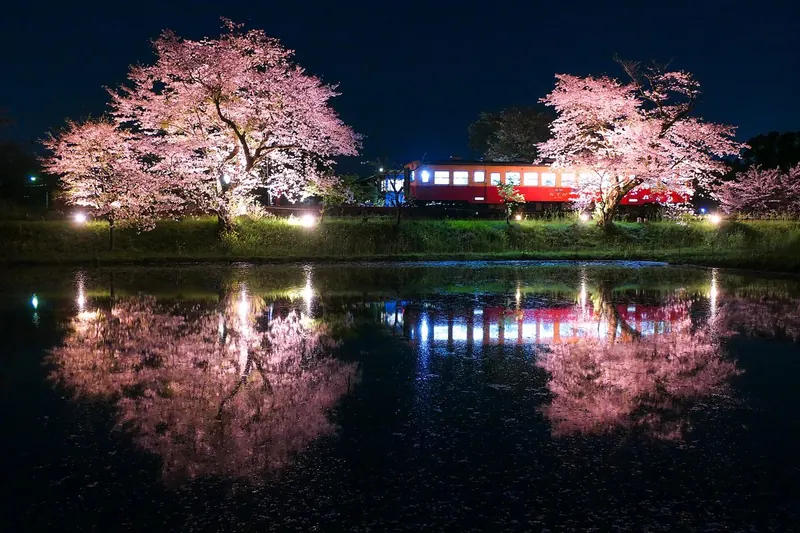
- Night viewing (yozakura) is popular: some parks and gardens light up their trees in the evening during the season.
- Spring days can be warm, but evenings are still cool. Bring a light jacket for evening walks. See Japan weather by month.
Sources (official)
- Japan Meteorological Agency: cherry first-blossom dates with 1991–2020 averages (Japanese)
- Japan Meteorological Agency: cherry full-bloom dates with 1991–2020 averages (Japanese)
- Japan Meteorological Agency: plant phenology observations (Japanese)
- JNTO: Spring in Japan, Cherry Blossom Forecast
- JNTO: Spring in Japan guide