Itinerary
Japan in 7 Days: Tokyo, Kyoto and Osaka for First-Timers
Three days in Tokyo, two in Kyoto and one in Osaka, linked by the Shinkansen. Two or three sights a day, with time to rest, and a flight home from Kansai Airport.
This page is a sample itinerary (day-by-day times, map, budget).
✓ 14 facts checked against official sources on November 18, 2026Next check: around May 2027
At a glance
- Days
- 7 days, 6 nights: Tokyo 3 nights, Kyoto 2 nights, Osaka 1 night
- Budget (estimate)
- About ¥25,000–¥45,000 per person per day including a mid-range hotel, food, trains and sights, plus flights (estimate)
- Who it suits
- First-time visitors who want the big three cities at a steady pace
- Getting around
- Trains and subways in each city with an IC card; Shinkansen Tokyo → Kyoto; JR train Kyoto → Osaka
- Flights
- Arrive in Tokyo (Narita or Haneda), fly home from Kansai Airport (an "open-jaw" ticket)
- Japan Rail Pass?
- Usually not worth it for this route: single tickets cost less than the 7-day pass (¥50,000)
Seven days is enough to see Tokyo's old temple town and modern streets, Kyoto's shrines and temples, and Osaka's food district, without rushing. This plan visits two or three places a day and leaves the late afternoon free, so you can rest at the hotel before dinner.
The route goes in one direction: you fly into Tokyo and fly home from Kansai Airport near Osaka. That way you never go back on the same line. If your flight home leaves from Tokyo, see the arrangements at the end.
Many sights in Kyoto involve slopes and stone steps. The plan says where, and where you can turn back early.
Day 1|Day 1Arrive in Tokyo
- 14:00
Arrive at Haneda or Narita Airport Map
After immigration and customs, buy an IC card at the airport station and take the train into the city. Haneda is closer to central Tokyo than Narita.
- 16:30
Check in to the hotel
Stay near a major station such as Tokyo or Ueno: it makes day 4 (the Shinkansen) easy. Rest after the flight.
- 18:30
Dinner around Tokyo Station Map
The station has many restaurants underground, so you can eat without walking far. Ramen, sushi and curry rice are easy first meals.
Day 2|Day 2Old Tokyo: Asakusa and Tokyo Skytree
- 8:30
Senso-ji temple, Asakusa Map
Tokyo's best-known temple. You walk through the big gate and a long shopping street to the main hall. The main hall opens 6:00–17:00 (6:30 from October to March); the grounds are quieter before 10:00. It is 5 minutes on foot from Asakusa Station.
- 10:30
Snack and shopping on the temple street Map
Small shops sell rice crackers, sweet buns and souvenirs. Most open around mid-morning.
- 12:00
Tokyo Skytree Map
A tall broadcasting tower with observation decks and a shopping mall at its base. From the deck you see the whole city; on clear days, Mount Fuji. Buy tickets on the official site to avoid the ticket line. It is one train stop or a 20-minute walk from Asakusa (estimate).
- 15:00
Back to the hotel to rest
Have lunch in the Skytree mall, then rest. Evening: dinner near your hotel.
Day 3|Day 3Modern Tokyo: Meiji Jingu and Shibuya
- 9:00
Meiji Jingu shrine Map
A Shinto shrine in a large forest in the middle of the city. Wide gravel paths lead through tall trees to the wooden shrine buildings. From the entrance, it takes at least another ten minutes on foot to the main buildings, so wear comfortable shoes. How to pray: Temples and shrines.
- 11:00
Harajuku and lunch Map
The streets next to the shrine's entrance are full of fashion shops and crêpe stands. Have lunch here or in Omotesando.
- 14:00
Shibuya Scramble Crossing Map
Hundreds of people cross in every direction when the lights change. Watch it from street level, then from a café above the crossing. Shibuya is one stop from Harajuku on the JR Yamanote Line.
- 16:00
Rest, then pack
Tomorrow you move to Kyoto. If you want, send your large bag ahead to the Kyoto hotel today: see Luggage in Japan.
Day 4|Day 4Shinkansen to Kyoto, Fushimi Inari
- 9:00
1Tokyo Station: board the Shinkansen Map
Buy a bento (boxed lunch) in the station and board the Tokaido Shinkansen to Kyoto. The Nozomi takes a little over two hours. On a clear day, Mount Fuji appears on the right side of the train, so a window seat E in an ordinary car has the view.
- 11:30
2Kyoto Station: leave bags at the hotel Map
Stay near Kyoto Station: buses, the subway and JR all start here. Leave your bags at the hotel before check-in time.
- 14:00
Fushimi Inari Taisha Map
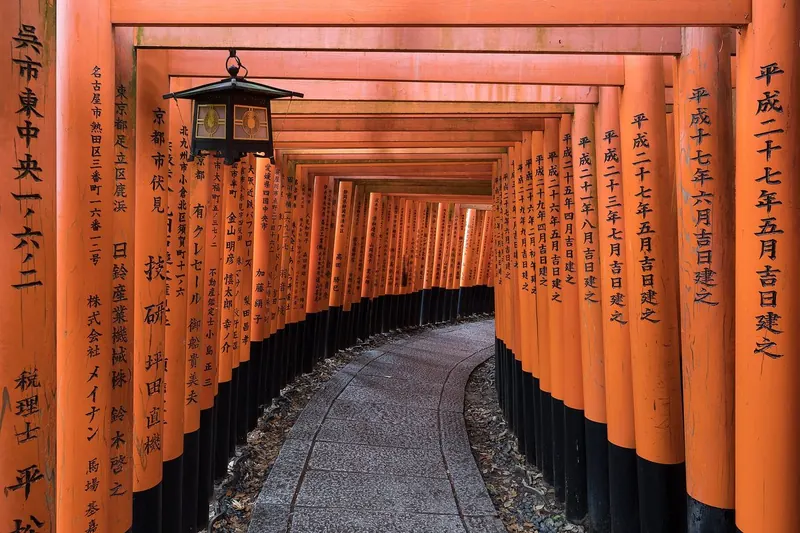
The shrine of thousands of orange torii gates that form tunnels up the mountain. It is right next to Inari Station on the JR Nara Line, 2 stations/5 minutes from Kyoto Station. The path climbs with many stone steps: walk the first section of gates (15–20 minutes, estimate) and decide whether to go higher.
- 17:00
3Dinner at Kyoto Station Map
The station building has restaurant floors with Kyoto dishes such as tofu, noodles and obanzai (Kyoto home-style side dishes).
Day 5|Day 5Kyoto: Kiyomizu-dera, Gion and Nishiki Market
- 8:00
1Kiyomizu-dera temple Map
A temple on a hillside with a large wooden stage that looks over the city. Kiyomizu-dera opens at 6:00 a.m.; arriving early means fewer people on the narrow streets. From Kyoto Station, take City Bus No.206 or No.100 to Gojozaka, then walk east about 10 minutes, uphill. A taxi can take you closer to the gate.
- 10:30
2Walk down to Gion Map
Walk downhill through old stone-paved lanes with wooden shops toward Gion, Kyoto's old entertainment district. Going down is easier on the knees than going up; take a taxi if you are tired.
- 12:30
3Nishiki Market Map
A covered market street about 390 meters long with food stalls and shops selling pickles, tea and knives, with 400 years of history. Good for lunch, bite by bite. Eat next to the stall where you bought the food, not while walking in the crowd.
- 14:30
Rest at the hotel
Kyoto days involve a lot of walking. Rest, then have dinner near your hotel.
Day 6|Day 6Osaka: the castle and Dotonbori
- 9:30
1JR train from Kyoto to Osaka Map
Take a JR train from Kyoto Station to Osaka Station (under 30 minutes by Special Rapid, estimate). Leave bags at the Osaka hotel or in a coin locker.
- 11:00
Osaka Castle Map
A rebuilt castle tower in a large park with stone walls and moats. Inside is a museum about the castle's history, and a viewing floor at the top. Check opening hours and tickets on the official site; the park itself is free.
- 13:30
Lunch and rest
Have lunch, then rest at the hotel. Osaka is best in the evening.
- 18:00
2Dotonbori Map
The main food and entertainment street of southern Osaka, along a canal with huge neon signs. Try takoyaki (octopus balls) and okonomiyaki (savory pancake). It is right outside Namba Station on the Nankai and Kintetsu Railways.
Day 7|Day 7Fly home from Kansai Airport
- 9:00
Namba Station to Kansai Airport Map
Trains from Namba run straight to Kansai Airport. Arrive at the airport at least 2 hours before an international flight (estimate; follow your airline's advice). If you bought tax-free items, keep them in your bag for the customs check.
- 11:00
Kansai International Airport Map
Check in and go through departure. See Leaving Japan for the steps.
Budget (per person)
| Shinkansen Tokyo → Kyoto (reserved seat, one way) | About ¥14,000–¥15,000 (estimate; price changes with the season) |
|---|---|
| JR Kyoto → Osaka | Under ¥1,000 (estimate) |
| Hotels (6 nights, mid-range, 2 people per room) | About ¥8,000–¥20,000 per person per night (estimate) |
| Food | About ¥4,000–¥8,000 per person per day (estimate) |
| City trains, subways and buses | About ¥1,000–¥1,500 per person per day (estimate) |
| Sights (Skytree, Kiyomizu-dera, Osaka Castle, etc.) | About ¥5,000–¥8,000 per person in total (estimate) |
| Total for 7 days (without flights) | About ¥120,000–¥230,000 per person (estimate) |
Before you go
- Book a flight into Tokyo and out of Osaka (Kansai). Most airline websites call this "multi-city".
- Get an IC card (a rechargeable train card such as Suica or ICOCA) on day 1. It works on trains, subways and buses in all three cities. See IC cards.
- Reserve the Shinkansen seat a few days ahead in busy seasons, especially if you have a large suitcase (see below). How to buy: How to ride the Shinkansen.
- Pack light or send bags ahead. Moving hotels three times is easier with one medium suitcase. See Luggage in Japan.
Large suitcases on the Shinkansen
- On the Tokaido Shinkansen (Tokyo–Kyoto–Osaka), baggage with total dimensions (length + width + height) of between 160 cm and 250 cm needs a reservation for a seat with an oversized baggage area.
- The seat costs the same as a normal reserved seat. Without a reservation, you pay a baggage fee of ¥1,000.
- A typical carry-on suitcase is well under 160 cm. A large check-in suitcase for a two-week trip is often over 160 cm (estimate): measure yours before you go.
Arrangements
- If your flight home leaves from Tokyo: on day 6, see Osaka in the morning, then take the Shinkansen back to Tokyo in the afternoon and stay near your airport. Fly home on day 7.
- If walking is hard for you: at Fushimi Inari, walk only the first part of the gates and come back. In Kyoto, use taxis between sights; short rides are not expensive (see Taxis in Japan).
- If it rains: Tokyo Skytree, Nishiki Market (covered) and the inside of Osaka Castle are good on wet days.
- If you have 8 or 9 days: add one more night in Kyoto and visit Nara (deer park and Todai-ji temple), or one night at a hot spring town. Read Onsen etiquette first.
- If you visit in spring or autumn: cherry blossom and autumn leaf weeks are the busiest of the year in Kyoto. Book hotels early. See Cherry blossom season and Autumn leaves.
Is the Japan Rail Pass worth it for this plan?
For this route, usually no. The 7-day Japan Rail Pass (ordinary class) costs ¥50,000 for an adult bought online. This plan uses one Shinkansen ride (Tokyo → Kyoto) and one short JR ride (Kyoto → Osaka), which together cost much less (see the budget).
Also, the fastest Shinkansen, the Nozomi, is not covered by the Japan Rail Pass. Pass holders must buy an extra Nozomi ticket (¥4,960 for Tokyo–Kyoto) or take the slower Hikari. More: Japan Rail Pass: is it worth it?
Point-and-show Japanese
| English | Japanese | Romaji |
|---|---|---|
| Does this train go to Kyoto? | この電車は京都に行きますか? | Kono densha wa Kyōto ni ikimasu ka? |
| Which platform? | 何番線ですか? | Nanban-sen desu ka? |
| Where is the elevator? | エレベーターはどこですか? | Erebētā wa doko desu ka? |
| Can you keep my luggage? | 荷物を預かってもらえますか? | Nimotsu o azukatte moraemasu ka? |
Before you go
- Fares for reserved Shinkansen seats change by season (slightly higher in peak periods). Check the price on smartEX, JR Central's official booking service.
- Kyoto's buses get very full in the middle of the day. In Kyoto, start early and use the subway or a taxi when buses are crowded.
- For hotels and food prices in more detail, see How much does a trip to Japan cost?.
Sources (official)
- JR Central: Oversized baggage on the Tokaido Shinkansen
- smartEX (JR Central official Shinkansen booking)
- Japan Rail Pass official site: prices
- Japan Rail Pass official site: Nozomi and Mizuho ticket
- Senso-ji official site: hours and access (Japanese)
- Meiji Jingu official site: access
- Fushimi Inari Taisha official site: access
- Kiyomizu-dera official site: location and access
- Nishiki Market official site
- Osaka Castle Main Tower official site
- Osaka Convention & Tourism Bureau: Dotonbori
- Tokyo Skytree official site