How to
Money in Japan: Cash, ATMs, Cards and How Much Cash to Carry
Cards work in most hotels, chain stores and stations, but Japan still runs on cash in many small places. Here is where to get yen, which ATMs take foreign cards, and how much to carry.
✓ 13 facts checked against official sources on November 18, 2026Next check: around May 2027
At a glance
- How much cash
- About ¥5,000–10,000 per person per day, plus a card for bigger bills (estimate)
- Where to get cash
- 7-Eleven ATMs (Seven Bank) and Japan Post Bank ATMs take most foreign cards
- Cards
- Visa, Mastercard and other international brands are generally accepted, but not everywhere
- Currency
- Japanese yen (¥). Notes: ¥1,000, ¥2,000, ¥5,000, ¥10,000. Coins: ¥1, ¥5, ¥10, ¥50, ¥100, ¥500
- Small payments
- An IC card such as Suica or PASMO pays for trains, buses, convenience stores and vending machines
You can pay by card in hotels, department stores, chain restaurants, convenience stores and most train ticket machines. Even so, JNTO calls Japan very much a cash-based society. Small family restaurants, market stalls, temple and shrine offices, and some rural buses and taxis still take cash only.
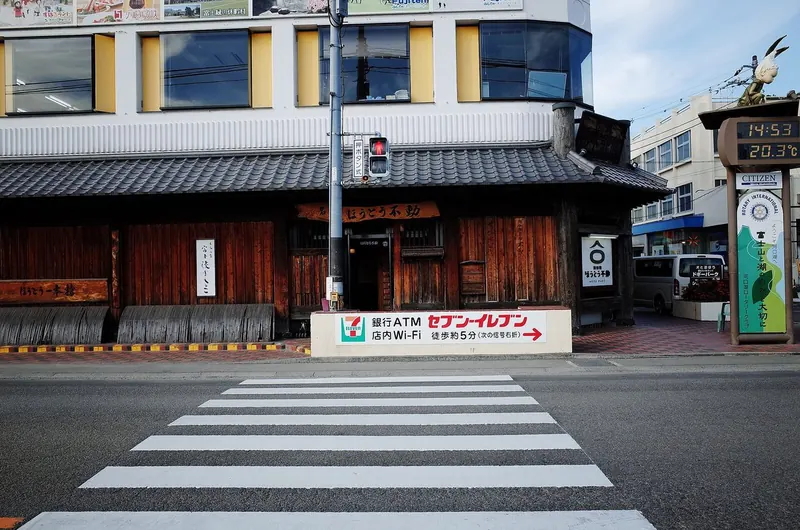
The easiest way to get yen is from an ATM after you land. ATMs at 7-Eleven stores and at Japan Post Bank (post offices) accept most foreign cards, and there are 7-Eleven stores in almost every town.
Most visitors do well with three things: a credit or debit card, an IC card for trains and small purchases, and some cash for the places that need it.
Japanese yen: notes and coins
- Notes: ¥1,000, ¥2,000, ¥5,000 and ¥10,000. The ¥2,000 note is rare.
- New notes from 2024: new designs of the ¥1,000, ¥5,000 and ¥10,000 notes were first issued on July 3, 2024. The older designs are still valid, so you will receive both.
- Coins: ¥1, ¥5, ¥10, ¥50, ¥100 and ¥500. The ¥5 and ¥50 coins have a hole in the middle.
- Coins pile up quickly. Use them at convenience stores, vending machines and coin lockers, or top up an IC card with them.
ATMs that take foreign cards
Not all ATMs are open 24 hours. Post office ATMs close at night, and ATMs in busy city areas can sometimes run out of cash. Take out enough before a weekend in the countryside.
- Seven Bank (in 7-Eleven stores): more than 28,000 ATMs across Japan. Accepts Visa, Mastercard, American Express, JCB, UnionPay, Discover, Diners Club and the PLUS, Cirrus and Maestro networks. Open 365 days a year; Visa and Mastercard work 24 hours. Up to ¥100,000 per withdrawal (magnetic stripe cards: ¥30,000).
- Japan Post Bank (post offices and some FamilyMart stores): accepts Visa, PLUS, Mastercard, Maestro, Cirrus, JCB, UnionPay and Discover. Up to ¥50,000 per withdrawal. Some cards are charged an ATM fee of ¥220 per use. Balance checks are not available.
- Japan Post Bank hours: ATMs at post offices are open Monday–Saturday 7:00–23:00, and Sundays, holidays and December 31–January 3 7:00–21:00. Hours vary by location.
- Fees: Seven Bank fees for foreign cards differ by card brand. Your own bank may also charge a fee and an exchange margin.
How to withdraw cash at a 7-Eleven ATM
- Insert your card.
- Choose your language (for example, English) on the screen.
- Enter your PIN (personal number).
- Choose 'Withdrawal' and the account type if asked.
- Choose or enter the amount in yen.
- Check the fee shown on the screen and confirm.
- Take your cash, card and receipt.
Paying by card
- JNTO says credit, debit and prepaid cards of international brands are generally accepted throughout the country.
- Cards are easy in hotels, department stores, electronics stores, chain restaurants, convenience stores and JR ticket machines.
- Expect cash only at many small restaurants and izakaya (Japanese pubs), food stalls, temple and shrine offices (for amulets and stamps), and some small inns.
- Look for the card logos at the entrance or the register. If you are not sure, ask before you order (see the phrases below).
IC cards for small payments
- An IC card (a rechargeable card such as Suica or PASMO) pays train and bus fares and also works at many convenience stores, vending machines, coin lockers and some taxis.
- You top it up with cash at station machines and convenience store registers, so it is a good way to use up coins.
- How to get one: Suica, PASMO and ICOCA.
Exchanging money
- All major airports have exchange counters in the arrivals halls.
- Exchange counters in cities are fewer than in many countries, and banks often close at 15:00. ATMs are usually easier.
- If you bring cash from home, change a small amount at the airport for your first day.
How much cash to carry
| Item | Price | Notes |
|---|---|---|
| Lunch at a small local restaurant | ¥1,000–1,500 | Often cash only (estimate) |
| Temple or shrine entry, amulet | ¥500–1,000 | Many offices take cash only (estimate) |
| Drinks and snacks | ¥500–1,000 | Vending machines and stalls (estimate) |
| IC card top-up for city trains and buses | ¥1,000–2,000 | Top up with cash (estimate) |
| Spare cash | ¥2,000–4,000 | For places without card readers (estimate) |
| Total | about ¥5,000–10,000 per day | Per person (estimate) |
- Day-to-day (estimate): about ¥5,000–10,000 per person per day for cash-only meals, temple and shrine entry, snacks and local transport top-ups. Pay hotels, shopping and long-distance trains by card.
- Countryside and small inns (estimate): carry more, about ¥20,000, because ATMs and card terminals are fewer.
- Japan is safe, but keep cash in a zipped pocket or bag, and do not carry your whole trip budget at once.
Things to watch out for
- Tell your bank before you travel so your card is not blocked when used in Japan.
- Choose to be charged in yen if a card terminal or ATM asks whether to charge in your home currency. The conversion offered by the machine is often more expensive.
- Prices and tax: consumption tax is 10% (8% on food and drink to take away, but not alcohol or eating in). Check whether a menu price includes tax.
- No tipping: you pay the price on the bill. See Tipping in Japan.
- Place money in the tray: at many registers you put cash or your card in a small tray rather than handing it over.
Point-and-show Japanese
| English | Japanese | Romaji |
|---|---|---|
| Can I pay by card? | カードで払えますか? | Kādo de haraemasu ka? |
| Cash only? | 現金だけですか? | Genkin dake desu ka? |
| Is there an ATM near here? | 近くにATMはありますか? | Chikaku ni ē-tī-emu wa arimasu ka? |
| The bill, please. | お会計をお願いします。 | Okaikei o onegai shimasu. |
Before you go
- Take out cash at the airport 7-Eleven or Japan Post Bank ATM on arrival, so you are ready for a cash-only dinner on day one.
- Bring two cards from different brands (for example, Visa and Mastercard) in case one is declined.
- Keep a few ¥100 coins for coin lockers and luggage carts.