How to
Getting Sick in Japan: Hospitals, Pharmacies and Travel Insurance
For an emergency call 119. For a minor problem go to a pharmacy or drugstore. For anything in between, use the Japan Tourism Agency's hospital search to find a clinic that speaks your language, and bring cash: many clinics take only cash.
✓ 14 facts checked against official sources on November 18, 2026Next check: around May 2027
At a glance
- The short answer
- Emergency: 119. Minor illness: pharmacy. Otherwise: find a hospital on the official medical institution search, ask for a cost estimate, and pay in cash or by card at large hospitals
- Ambulance
- 119; you cannot choose which hospital it takes you to
- Paying
- Credit cards mainly at major hospitals; clinics generally accept cash only
- Without insurance
- You may be charged the full amount
- Insurance
- Buy travel insurance before you leave; it can also be bought online after arrival
- Help by phone
- JNTO Japan Visitor Hotline 050-3816-2787, 24 hours, English, Chinese, Korean
If you get sick in Japan, you pay for your own treatment. Without insurance you may be charged the full amount, and clinics generally accept cash only. Travel insurance that pays the hospital directly saves you from carrying large sums.
Language is the other hurdle. Only a limited number of hospitals can treat patients in English or other languages, so search for one before you go, and call ahead.
This page follows the Japan Tourism Agency's 'Guide for when you are feeling ill' and the Japan National Tourism Organization (JNTO).
Overview: where to go
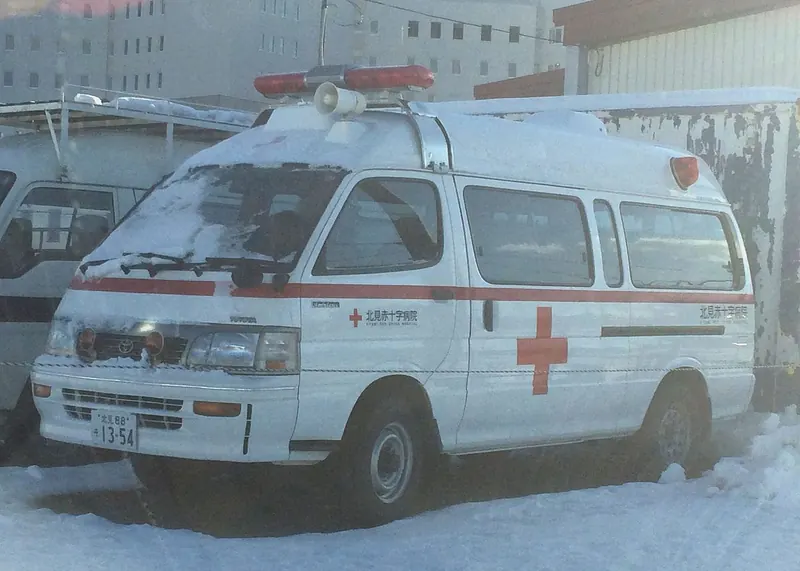
- Emergency (serious injury, chest pain, unconscious): call 119 for an ambulance.
- Minor problem (cold, stomach upset, small cut, sunburn): go to a pharmacy or drugstore near you.
- Need a doctor but not an emergency: search for a hospital or clinic on the Japan Tourism Agency medical guide. You can filter by area, language, department and whether credit cards are accepted.
- Not sure: call the JNTO Japan Visitor Hotline (050-3816-2787, 24 hours a day, 365 days a year) for advice in English, Chinese or Korean. Each prefecture also runs a medical consultation line.
Calling an ambulance: step by step
- Dial 119. Say 'Kyūkyū desu' (it is a medical emergency).
- If you cannot speak Japanese, show this sentence to a Japanese person nearby: 救急車を呼んでください。(Please call an ambulance.)
- Give the address or a nearby landmark. In a hotel, ask the front desk to call.
- The ambulance takes you to a hospital that can accept you. You cannot choose which hospital.
- Bring your passport, insurance details and cash or a card if you can.
Seeing a doctor: step by step
- Find a hospital or clinic on the medical institution search. Check its languages and opening hours.
- Call ahead to confirm that it can see you and in which language. Language support differs from place to place.
- At reception, show your passport and your insurance details.
- Ask for a general estimate of the treatment cost before you are treated.
- If you have trouble explaining, use the symptom sheet from the guide: you point to your symptoms in your language and the staff read them in Japanese.
- Pay at the end. If your insurance offers cashless treatment, you may not need to pay at the desk. Otherwise you may be charged the full amount.
- If you get a prescription, take it to a pharmacy and pay for the medicine there separately.
- Keep every receipt and the medical certificate for your insurance claim.
Pharmacies and medicines
- Drugstores sell everyday medicines for colds, headaches, stomach problems and allergies. Look for 薬 (medicine) on the sign.
- Some kinds of medicine cannot be bought without a doctor. Ask the pharmacist.
- An English search for over-the-counter medicines is linked from the official medical guide.
- If you bring your own medicine into Japan, check the rules first: see What You Can Bring Into Japan.
Travel insurance
- Buy it before you leave. JNTO asks visitors to sign up for travel insurance with adequate coverage before departure.
- What to look for: medical costs, cashless payment at the hospital, an interpretation service, and help finding a hospital.
- Forgot? The Japan Tourism Agency's guide promotes private medical insurance for visitors that can be bought online after you arrive in Japan.
- Not covered: travel insurance does not cover perinatal care (pregnancy and childbirth). Pregnant travelers should check carefully.
- Unpaid bills: the official guide warns that leaving medical bills unpaid may lead to being refused entry to Japan in the future.
Watch out for
- Carry enough cash: clinics generally accept cash only, and credit cards are accepted mainly at major hospitals. See Money in Japan.
- Only a limited number of hospitals accept patients in foreign languages. Search the list for the places you will visit before you go.
- Summer heat causes heatstroke. Drink water often and rest in the shade; see Electricity and Water in Japan.
- For theft, loss and police numbers, see Is Japan Safe?.
Point-and-show Japanese
| English | Japanese | Romaji |
|---|---|---|
| Please call an ambulance. | 救急車を呼んでください。 | Kyūkyūsha o yonde kudasai. |
| I feel sick. | 気分が悪いです。 | Kibun ga warui desu. |
| It hurts here. | ここが痛いです。 | Koko ga itai desu. |
| Is there a hospital that speaks English? | 英語が話せる病院はありますか? | Eigo ga hanaseru byōin wa arimasu ka? |
| Where is the nearest pharmacy? | 近くの薬局はどこですか? | Chikaku no yakkyoku wa doko desu ka? |
| How much will it cost? | いくらかかりますか? | Ikura kakarimasu ka? |
| Can I pay by credit card? | クレジットカードで払えますか? | Kurejitto kādo de haraemasu ka? |
| I have travel insurance. | 旅行保険に入っています。 | Ryokō hoken ni haitte imasu. |
Before you go
- Save 119 and the JNTO hotline 050-3816-2787 in your phone.
- Download the symptom sheet from the official medical guide before you travel.
- Carry your insurance policy number and the insurer's emergency phone number with your passport.
- Keep some cash for clinics, which generally do not take cards.