
How to
Tokyo Metro and Toei Subway: Lines, Fares and Transfers
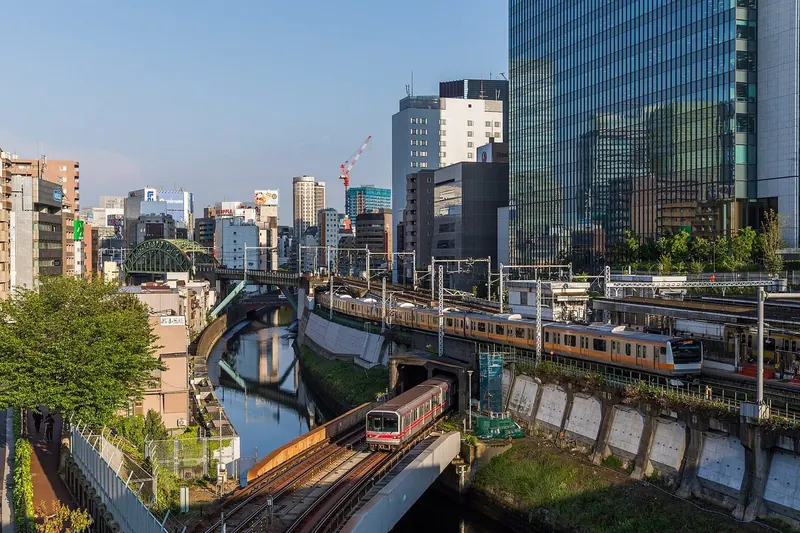
Tokyo's subway is run by two companies, Tokyo Metro and Toei Subway, with more than 280 stations in total. An IC card (a rechargeable train card such as Suica) is the easiest way to pay, and you do not need a separate ticket to transfer between the two.
✓ 15 facts checked against official sources on November 21, 2026Next check: around May 2027
At a glance
- Operators
- Tokyo Metro (9 lines, 180 stations) and Toei Subway (4 lines, 106 stations)
- Fares
- Tokyo Metro ¥180 to ¥330; Toei ¥180 to ¥430 (by distance)
- Running hours
- About 5:00 until around midnight (24:00)
- Easiest way to pay
- IC card (such as Suica or PASMO)
- JR tickets
- Cannot be used on the subway
Besides JR trains, the subway is what you will use most for getting around central Tokyo. GO TOKYO (the Tokyo government's tourism site) says Tokyo's subway has more than 280 stations, and you can reach sightseeing areas such as Asakusa, Ginza, Roppongi and Omotesando by subway.
The part that confuses people is that there are two subway companies. Tokyo Metro has 9 lines and Toei Subway has 4. They are separate companies with separate tickets, but with an IC card you just tap in and tap out, and it does not matter which company runs the line.
This page covers the lines, fares, running hours, how to ride, and things to watch for when transferring. If you plan to ride many times in one day, see Tokyo Subway Ticket.
The two subway companies
- Tokyo Metro (東京メトロ): 9 lines and 180 stations, with a total track length of 195 km. The Ginza Line, Marunouchi Line, Hibiya Line and others belong to this company.
- Toei Subway (Tokyo Metropolitan Bureau of Transportation): 4 lines, the Asakusa, Mita, Shinjuku and Oedo lines, with 106 stations in total.
- They are two different companies, so the tickets are different. If you buy paper tickets, check which company's ticket you are buying. With an IC card you do not need to worry.
- The subway is not part of JR East, so JR tickets cannot be used on it.
Fares
- Fares depend on the distance you travel.
- Tokyo Metro: ¥180 to ¥330.
- Toei Subway: ¥180 to ¥430.
- If you will ride many times in a day, consider the Tokyo Subway Ticket, which covers all Tokyo Metro and Toei Subway lines.
Running hours
- Trains run from about 5:00 until around midnight (24:00).
- The first trains leave at around 5:00.
- The last train is between 11:30 p.m. and 0:30 a.m. and differs by line and station. If you are going out for drinks or night views, check the last train first.
How to ride (with an IC card)
- Get an IC card: Suica or PASMO both work. A regular card requires a ¥500 deposit. Welcome Suica and TOURIST PASMO, made for visitors, have no deposit but are valid for only 28 days (see Suica, PASMO and ICOCA).
- Plan your route: use a route-search app or Google Maps to find the line you need and where to change trains.
- Enter the station: tap your card on the reader at the ticket gate.
- Find the platform: follow the line's color and name, and check the direction of the train (which station it is heading for).
- Transfer: follow the transfer signs in the station. Some transfers mean leaving one gate and entering another; with an IC card you simply tap again.
- Exit the station: tap your card at the exit gate and the fare is deducted automatically. If your balance is too low, the gate will close; go to the fare adjustment machine next to it to pay the difference.
Reading lines and station names
- Route maps use a different color for each line. Remember the color of the line you need.
- Stations and trains have signs in several languages, including Chinese and English.
- Station names are written in Japanese kanji, and some differ from the Chinese characters (for example, "Asakusa" is written 浅草 in stations). When you search in an app, try both the Japanese and the Chinese spelling.
- GO TOKYO's website has a subway route map (PDF) in Traditional Chinese that you can download to your phone beforehand.
Things to know
- Some subway lines connect directly to other railways, and the train continues onto another company's tracks. Check the station name before you get off.
- If you use a paper ticket, put it into the ticket gate that has a yellow slot.
- Every car has priority seats. Please give them to older people, pregnant women and anyone who needs them.
- Morning and evening rush hours are very crowded. If you have a large suitcase, avoid those times if you can.
Point-and-show Japanese
| English | Japanese | Romaji |
|---|---|---|
| Which line do I take to Asakusa? | 浅草へは何線に乗ればいいですか? | Asakusa e wa nani-sen ni noreba ii desu ka? |
| Does this train stop at Ginza? | この電車は銀座に止まりますか? | Kono densha wa Ginza ni tomarimasu ka? |
| I would like to add money to my IC card. | ICカードにチャージしたいです。 | Ai-shī kādo ni chāji shitai desu. |
Before you go
- An IC card is the easiest option: it works on Tokyo Metro, Toei Subway and JR, so you do not have to buy a ticket each time.
- The last train is between 11:30 p.m. and 0:30 a.m. If you want to catch the last one, confirm the time in an app first.
- If you ride 3 or 4 times a day or more, work out whether the Tokyo Subway Ticket is worth it.
- The JR Yamanote Line is not a subway, and subway day passes are not valid on it (see Yamanote Line).