How to
Japan Entry Requirements: Visa, Visit Japan Web and the Arrival Process
Do you need a visa, what to fill in before the flight, and what happens step by step from the plane to the arrival lobby.
✓ 15 facts checked against official sources on November 17, 2026Next check: around May 2027
At a glance
- Passport
- Every foreign visitor needs a valid passport.
- Visa
- Passport holders of some countries and regions need no visa for tourist stays of 90 days or less. Check your country on the Ministry of Foreign Affairs list.
- Before the flight
- Register your arrival details on Visit Japan Web. Japan Customs recommends making your customs declaration there.
- At the airport
- Quarantine → Immigration → Baggage claim → Animal and plant quarantine → Customs → Arrival lobby.
- Forms
- Foreign nationals need an arrival card. All passengers make a customs declaration (online or on paper).
- Cash
- Declare cash and other means of payment over ¥1,000,000 to Customs.
Arriving in Japan takes a series of short checks in one fixed order: a health check, immigration, baggage claim and customs. At a big airport such as Narita or Haneda, the signs are in English, and you simply follow the crowd from the plane to the arrival lobby.
Most of the work can be done before you leave home. Check whether you need a visa, and enter your arrival and customs details on Visit Japan Web. If you skip Visit Japan Web, paper forms are still available on the plane and at the airport.
This page covers the rules and the arrival steps. For how to fill in Visit Japan Web screen by screen, see Visit Japan Web. For what you may bring in, see What You Can Bring Into Japan.
Do I need a visa?
JNTO says that all foreign visitors must have a valid passport. Passport holders of some countries and regions do not need a visa if they stay 90 days or less and only do tourism.
The list of these countries, and the length of stay for each, is set by Japan's Ministry of Foreign Affairs. It can change at any time, and some countries have a shorter limit or extra conditions. Find your country on the Ministry of Foreign Affairs visa exemption list before you book.
If your country is not on the list, or you plan to work or study, apply for a visa at a Japanese embassy or consulate. The Ministry of Foreign Affairs visa page explains the types of visa.
Before you fly
Step-by-step screens are on the Visit Japan Web page of this guide.
- Check that your passport is valid for the whole stay.
- Check your country on the Ministry of Foreign Affairs visa exemption list.
- Create an account on Visit Japan Web and enter your passport, flight and stay details.
- Fill in the customs declaration on Visit Japan Web. You will get a QR code to show at customs.
- Save a screenshot of your QR codes, in case your phone has no signal after landing. If you do not use Visit Japan Web, fill in the paper forms handed out on the plane.
From landing to the arrival lobby
This is the order at Narita and Haneda Airports. Other international airports use the same basic steps.
- Quarantine (health check): If the crew handed out a health questionnaire on the flight, fill it in and hand it to the quarantine officer. If you have a fever or diarrhoea or feel unwell, tell a quarantine officer.
- Immigration: Show your passport at the immigration counter. Foreign nationals also need an arrival card (on paper, or through Visit Japan Web). Follow the officer's instructions. If you use a facial recognition gate or automated gate, you get no stamp in your passport.
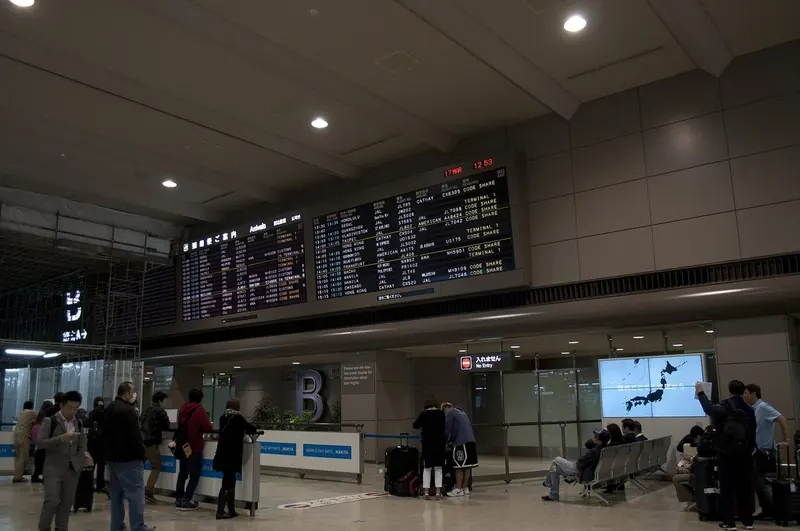
- Baggage claim: Find your airline and flight number on the screens, then go to that baggage carousel (moving belt) and collect your checked bags.
- Animal and plant quarantine: If you carry meat, fruit, plants or other animal or plant products, go to this counter before customs. Many of these items cannot be brought in. See What You Can Bring Into Japan.
- Customs: Hand in your customs declaration form, or use your Visit Japan Web QR code at the electronic declaration gate. Then walk through the green or the red channel (see below).
- Arrival lobby: After customs you come out into the arrival lobby. Trains, buses and taxis to the city leave from here. See Narita Airport to Tokyo, Haneda Airport to Tokyo or Kansai Airport to Osaka and Kyoto.
Customs: green or red channel
Japan Customs says all passengers entering Japan must declare their belongings. Japan Customs recommends doing it electronically with Visit Japan Web. Electronic Customs Declaration Gates are available at 7 international airports. Paper forms are available on the plane, on the ship or at Customs.
Duty-free allowance for one adult, as listed by Japan Customs: | Item | Allowance | Notes | |---|---|---| | Alcoholic drinks | 3 bottles | One bottle is about 760 ml | | Cigarettes | 200 cigarettes | Other limits apply to cigars (50) and other tobacco (250 g) | | Perfume | 2 ounces | One ounce is about 28 ml | | Everything else | Total under ¥200,000 | Overseas market value of all other items | In everyday terms, normal clothes, a laptop and a few gifts are fine (estimate). Several bottles of wine, a carton of cigarettes plus duty-free shopping, or an expensive watch bought abroad may be over the limit: then use the red channel.
- Green channel: for passengers who have no goods subject to duty or tax, and nothing prohibited or restricted.
- Red channel: for all other passengers. Use it if you are over the duty-free allowance below, carry restricted items, or are not sure.
Things to watch out for
- Large amounts of cash: if you carry cash or other means of payment (such as cheques) worth more than ¥1,000,000, you must declare it to Customs on a separate form ("Declaration of Carrying of Means of Payment, etc."). Ask a customs officer for the form before you pass customs.
- Prohibited items: narcotics, firearms, explosives, counterfeit money, obscene material and goods that copy brands or other intellectual property cannot be brought in. If you carry medicines, check What You Can Bring Into Japan before you pack.
- Food: meat, fruit and plants go through animal and plant quarantine. If you carry any, go to the quarantine counter after baggage claim and show them, rather than walking straight to customs.
- Visa rules change: the exemption list can change at short notice. Check the Ministry of Foreign Affairs list again a few weeks before you fly.
Point-and-show Japanese
| English | Japanese | Romaji |
|---|---|---|
| I am here for sightseeing. | 観光です。 | Kankō desu. |
| I will stay for one week. | 1週間滞在します。 | Isshūkan taizai shimasu. |
| I am staying at this hotel. | このホテルに泊まります。 | Kono hoteru ni tomarimasu. |
| I have nothing to declare. | 申告するものはありません。 | Shinkoku suru mono wa arimasen. |
| Where is the baggage claim? | 手荷物受取所はどこですか。 | Tenimotsu uketorijo wa doko desu ka. |
| I don't understand Japanese. English, please. | 日本語が分かりません。英語でお願いします。 | Nihongo ga wakarimasen. Eigo de onegai shimasu. |
Before you go
- Keep your passport, your Visit Japan Web QR codes and your hotel address in one place. You may be asked where you are staying.
- Fill in Visit Japan Web before you leave home, when you have time and a good connection. Doing it on airport Wi-Fi after landing is slower.
- If you need a passport stamp as a souvenir after using an automated gate, ask a staff member right after the gate.
Sources (official)
- JNTO: Entry Into Japan and Visa Information
- Ministry of Foreign Affairs of Japan: Exemption of Visa (Short-Term Stay)
- Ministry of Foreign Affairs of Japan: Visa
- Digital Agency: Visit Japan Web
- Japan Customs: Procedures of Passenger Clearance
- Narita International Airport: Arrival procedure (international flights)
- Haneda Airport: Arrival Procedures (international)