Nagasaki Lantern Festival 2027, Japan's Chinese New Year Festival: Thousands of Lanterns Light the City, February 5–21
For 17 days around Chinese New Year, Nagasaki's Chinatown and the streets around it fill with red and yellow lanterns. The Emperor Parade is on February 13 and 20, and the Mazu Procession on February 7 and 14.
✓ 9 facts checked against official sources on Nov 11, 2026
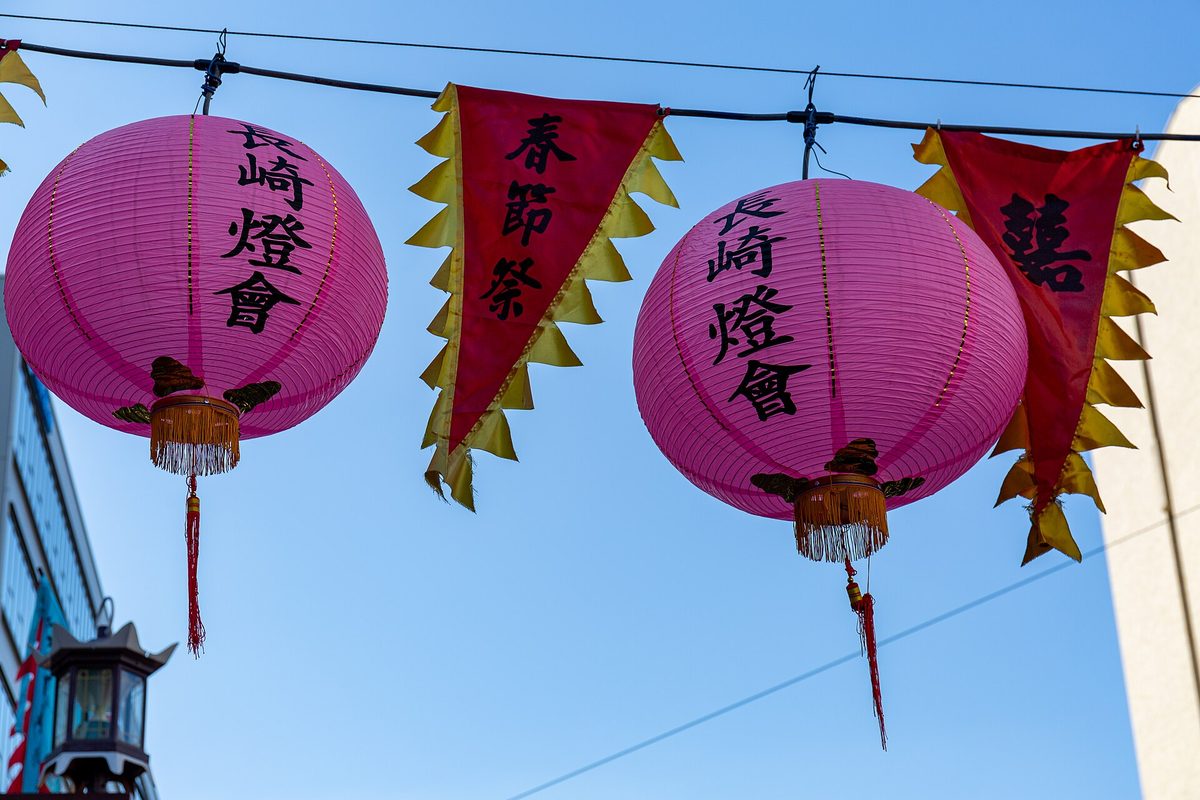
On a February evening in Nagasaki, the narrow lanes of Shinchi Chinatown turn red and gold. Lanterns hang in rows over the streets and the Dozagawa river, and the smell of steamed buns and fried noodles drifts out of the shops. Somewhere a gong sounds, and a long dragon twists through the crowd.
The Nagasaki Lantern Festival grew out of the Chinese New Year celebrations of the city's Chinese community, and today it fills the whole city center. In 2027 it runs for 17 days, from Friday, February 5 to Sunday, February 21, with lantern displays from Shinchi Chinatown to the Hamaichi and Kanko-dori shopping arcades.
Nagasaki's long ties with China are part of everyday life here, and during the festival you can walk through them: Chinatown, a Confucian shrine and the old harbor, all lit up at once.
Special events in 2027
The official site also lists Chinese face-changing shows and erhu music during the festival. Check the official site for times and routes, which are announced closer to the date.
- Dragon dance (Ja-odori): every day during the festival
- Mazu Procession: Sunday, February 7 and Sunday, February 14
- Emperor Parade: Saturday, February 13 and Saturday, February 20. The emperor on February 13 is Nagasaki's governor, and on February 20 the singer Kiyoshi Maekawa
Nagasaki Lantern Festival (Shinchi Chinatown and central Nagasaki)
Seventeen nights of lanterns, dragons and Chinese New Year in Japan's old port city
The lanterns hang across the city center, but most visitors start in Shinchi Chinatown, where lanterns float over the Dozagawa river, then walk to Minato Park and Chuo Park, where the big lantern displays and food stalls are. Along the Belnard Kanko-dori arcade you can find Gekka Rojin, the Chinese god of matchmaking; a red-thread charm costs ¥100.
The Nagasaki Confucius Shrine, a few minutes' walk uphill from Chinatown, is also part of the festival. It has its own entry fee (adults ¥880, high school students ¥550, elementary and junior high students ¥440) and is open 9:30 to 18:00, with last entry at 17:30.
Official hand-held lanterns, with designs that differ by shop, are sold at Minato Park and Chuo Park, at Map Design GALLERY in Nagasaki Stadium City and at Nagasaki Airport, and through the STLOCAL app.
- Dates
- February 5 (Fri) – February 21 (Sun), 2027
- Where
- Shinchi Chinatown, Kanko-dori Arcade, Chuo Park, Minato Park and other sites in central Nagasaki
- Admission
- Free to walk around; the Nagasaki Confucius Shrine charges ¥880 for adults
- Mazu Procession
- February 7 and 14
- Emperor Parade
- February 13 and 20
- Contact
- Nagasaki City call center, 095-822-8888
- Address
- Shinchi Chinatown, Kanko-dori Arcade, Chuo Park and other sites, Nagasaki
Before you go
- The Emperor Parade Saturdays (February 13 and 20) are the busiest days. Book a hotel in Nagasaki early if you want to see a parade.
- The festival is held around Lunar New Year, a busy travel time across East Asia, so book flights to Nagasaki or Fukuoka early.
- Central Nagasaki is compact: Shinchi Chinatown, Minato Park and Chuo Park are close together, and the city's trams stop nearby.
- Lighting hours and event times are not yet on the official page; check it again before you go.
Sources: 2027長崎ランタンフェスティバル 特設サイト(あっと!ながさき) · 長崎ランタンフェスティバル イベント情報(あっと!ながさき) · 皇帝パレードの皇帝役が決まりました · 公式手持ちランタン販売場所一覧(2027長崎ランタンフェスティバル)